
Music in ancient Egyptian civilization
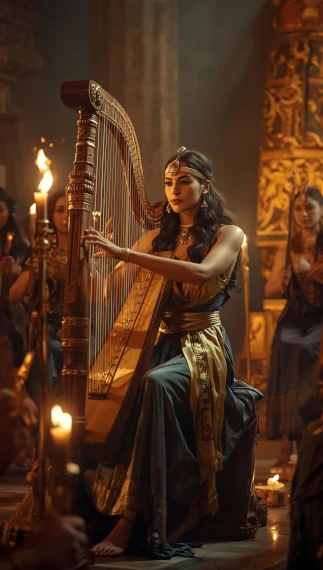
MUSIC AND THE GODS
Before we dive into the tunes, it’s important to set the scene. Ancient Egyptian religion was deeply intertwined with everyday life. They believed in a pantheon of gods and goddesses, each of whom controlled different aspects of nature and society. From the sun god Ra, who was associated with creation, to Osiris, the god of the afterlife, Egyptian gods were believed to influence everything from health, prosperity, death, and rebirth.
Let’s get this straight: in ancient Egypt, music was more than just a backdrop to religious rituals. It was an active participant in connecting with the divine. Think about it: what do we do when we need to communicate with someone on a deeply personal level? We use language, tone, body language – even silence. For the Egyptians, music was part of this “vocabulary” when communicating with the gods.
In ancient Egypt, music was more than just a ceremonial tool – it was an integral part of the divine order. She was the bridge between the earthly and the heavenly, the language that spoke directly to the gods. Whether it was the deep vibrations of a drum or the gentle sounds of a lyre, music determined the very rhythm of their religious life.
The ancient Egyptians credited the goddess Bat and the god Ihy with inventing music. The cult of Bat eventually merged with the cult of Hathor, because both goddesses were depicted as cows. It was believed that Hathor’s music was used by Osiris in his attempts to civilize the world. The lion goddess Bastet and Mert were also considered goddesses of music in Ancient Egypt.
Mert is the goddess of music and chant among the Egyptians. “Mert” means “beloved.” Her sanctuary was called nothing less than the “golden house.” Mert was depicted as a miniature woman with a symbolic sign of gold “hanging” over her head. She beat out a musical beat with her palms.
Mert was not just a goddess of music, but patronized the performance of divine hymns. She was welcomed and glorified during Heb-sed or “the festival of the tail”. The ancient Egyptian celebration was celebrated with pomp and unprecedented scope. After all, the holiday marked the 30-year reign of the pharaoh, and then it was celebrated every 3 years of his reign.
Usually, new stunning buildings were erected in honor of such a grand event. A striking example is the temple in honor of the goddess Bastet in Bubastis. During the reign of Osorkon II, a new granite portal appeared in the sanctuary, on the reliefs of which scenes from the celebration of Heb-sed are depicted.
The holiday itself meant the restoration of the male power of the pharaoh, and therefore symbolized a new round in the development of the country. Only a powerful and strong ruler could ensure the prosperity of the state. And since the tail of the animal was present in the pharaoh’s attire, as an obligatory attribute of his royal power, the celebration received its strange name – “The Festival of the Tail”. Sometimes Mert was considered the wife of Hapi, then her “crown” was replaced with a blue lotus or papyrus. These are two symbolic plants for Egypt: the lotus symbolized Upper Egypt, papyrus was associated with Lower Egypt.
When Mert was depicted together with her husband – Hapi (the god of the Nile and patron of the harvest), she offered him a cup to receive bounties (harvest, profit, good) from the hands of God. This was an important essence of the goddess for the poor and people of the lower caste, because for them, growing and receiving a harvest was the fundamental principle of life. But for people of a higher social status, Mert, accepting gifts from Hapi, was identified with receiving pleasures and enjoyments, including music and singing.
Many gods were identified with music, although they were “engaged” in other activities. One of the functions of the great Bast was music and dancing, although she was primarily associated with joy, fertility, female beauty and sexuality.
Another god of music in Egypt was called Ayhi (Ihi, Harsomtus). His mother was the goddess of the sky, love and beauty – Hathor (Hathor). Ayhi’s father is not known for sure. He is considered to be either Horus of Behdet, or the great Ra, or the deity with the falcon head Horus.
One version points to Horus as Ayhi’s brother, not his father. The birth of Ihi also meant the unification of Upper and Lower Egypt for the Egyptians. His power was quite serious, if in Dendera Ayhi was revered at the level of the almighty Horus and one of the main goddesses – the magnificent Hathor.
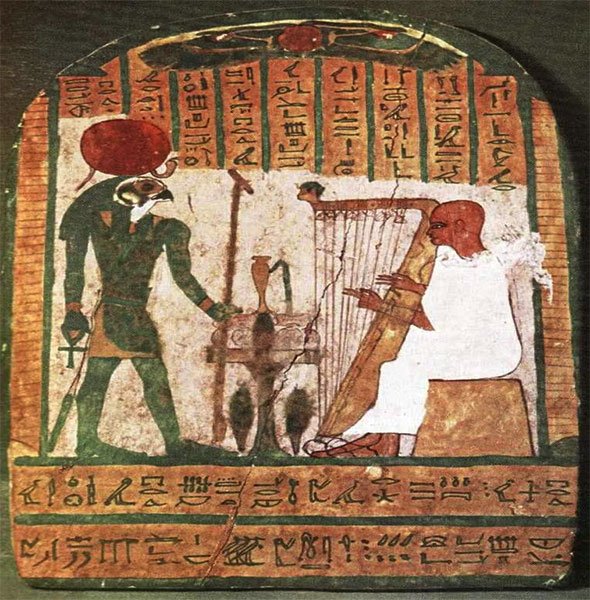
Ayhi was depicted in different ways. Sometimes in the form of an adult who played a sistrum – a ceremonial musical instrument similar to a large rattle. Sometimes Ihi is a small child. His age in the image was given away by complete nudity, a finger raised to his mouth (a gesture typical of babies) and a “curl of youth”. This is how the Egyptians depicted children. In both cases, Ayhi held a sistrum in his hand. The instrument, when shaken, made a sound similar to rustling. It was used in religious rites. It was believed that the sistrum is the sign of Hathor, which also symbolizes “life.”
MUSIC AND WAR
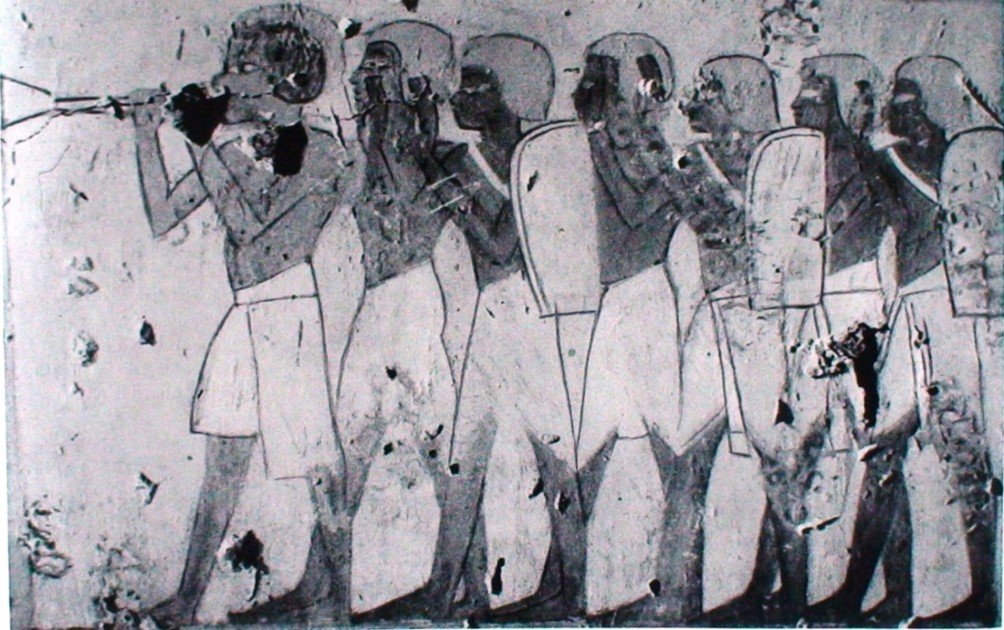
Music also accompanied the marches of soldiers to give them strength and courage. The instruments associated with war were the kemkem drum, which was also played during some religious ceremonies. It came in different sizes and was cylindrical or barrel-shaped. Leather membranes were attached to a wooden or metal frame with nails, laces or glue.
Many images of the drum date back to the New Kingdom. They are depicted in the hands of soldiers, usually Nubians, which suggests its African origin. The trumpet appears in images where victorious soldiers dance to it. In the tomb of Tutankhamun, two trumpets were found – a silver one and a copper one, which had been silent for over three thousand years. But for a BBC report on April 16, 1939, they sounded again.
THE ROLE OF MUSIC IN ANCIENT EGYPTIAN RELIGIOUS RITUALS
Music has always been more than just sound – it is the language of the soul. With its help we express joy, sorrow, reverence and love, even when words fail. Now imagine a world in which music is not just entertainment, but a vital tool for connecting with divine forces. In Ancient Egypt, this was exactly the case. The role of music in Egyptian religious rituals was not simply decorative, it was transformative. Music served as a bridge between people and gods, shaping the very essence of their spiritual lives. So, let’s look at how this ancient civilization used music not only to honor their gods, but also to elevate the spiritual atmosphere.
The Egyptian priests and their rituals were believed to help maintain this divine order, and music played a vital role in this process. Music was not only used for spiritual upliftment, it was woven into the very fabric of Egyptian rituals and temple ceremonies. Whether it was the deep tones of the sistrum (an ancient musical instrument) or the rhythmic beats of the drums, each sound had a purpose – a role in maintaining cosmic balance.
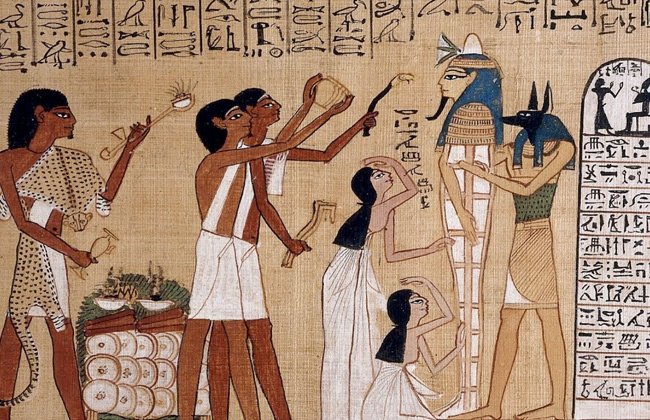
In Ancient Egypt, music was more than just a backdrop to religious rituals. It was an active participant in the connection with the divine. For the Egyptians, music was part of this “vocabulary” when communicating with the gods.
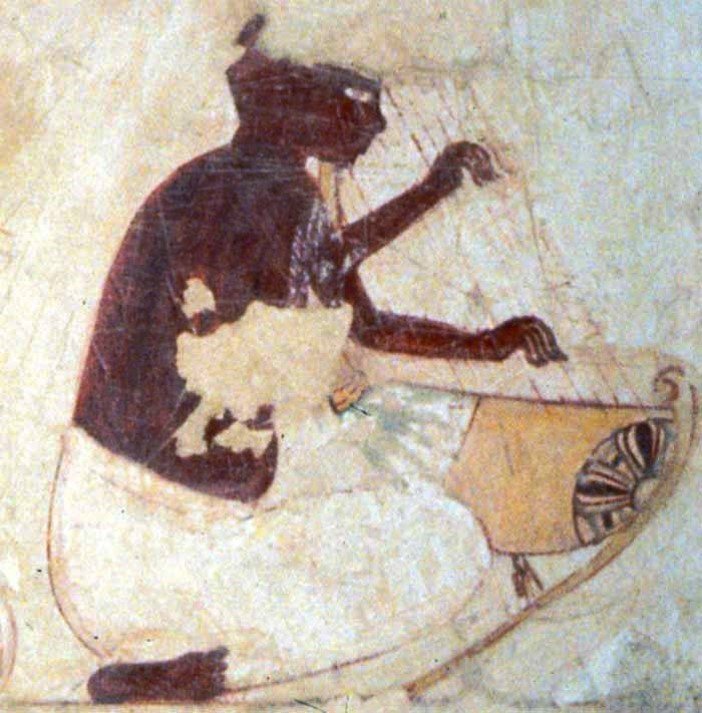
When we think of music, we tend to focus on the instruments themselves. But in Ancient Egypt, these instruments were more than just instruments – they were sacred relics. They were believed to have their own divine connection to the gods. Instruments such as the sistrum (a type of rattle), lyres, harpoons, flutes, and drums were common in religious rituals. But it wasn’t just the sounds these instruments made, but the symbolism behind them.
Take the sistrum, for example. It was one of the most important instruments in Egyptian religious rituals. The sistrum was associated with the goddess Hathor, the deity of love, music, and joy. The instrument itself, a rattle made of metal, was believed to have magical properties. The sound of the sistrum was thought to calm the gods or to spur them to action, depending on the purpose of the ritual. So when a priest shook the sistrum during a ceremony, he wasn’t just making noise – he was invoking divine energy.
Another example is the lyre, which was often played in honor of the gods during feasts and other religious events. It’s easy to imagine how the gentle plucking of the strings could create an atmosphere of peace, reverence, or celebration. Each instrument had its own role, its own vibration, designed to evoke a certain response from the gods or to help the priest connect with the divine.
Music was also a huge part of the public religious experience. Grand festivals like the Opet Festival or the Sed Festival were meant to honor the gods and affirm the divine order. Music was not just a side note at these events, it was the heart of the celebration. Drums, flutes, and lyres filled the air as people danced, sang, and praised their gods in a joyful exuberance.
Music also had a more performative aspect during these festivals. Priests chanted hymns to the gods, and dancers used rhythm to convey symbolic movements, sometimes imitating the gods themselves. Imagine the color, the energy, the sheer joy that filled the temples during these ceremonies. Music was not just heard, it was felt, deeply, in body and soul.
The role of music in the religious rituals of the ancient Egyptians gives us an insight into how deeply sound was embedded in their everyday and spiritual lives. It wasn’t just entertainment or artistic expression – it was a sacred act, a way to communicate with the gods, maintain balance in the universe, and guide souls in the afterlife. Music was – and still is – a powerful, transcendent force. And if we’re being honest, we can all relate to that, right? After all, we all have that one song that, when we hear it, touches something deep inside us. Maybe we still turn to ancient Egyptian magic.
MUSIC AND DEATH
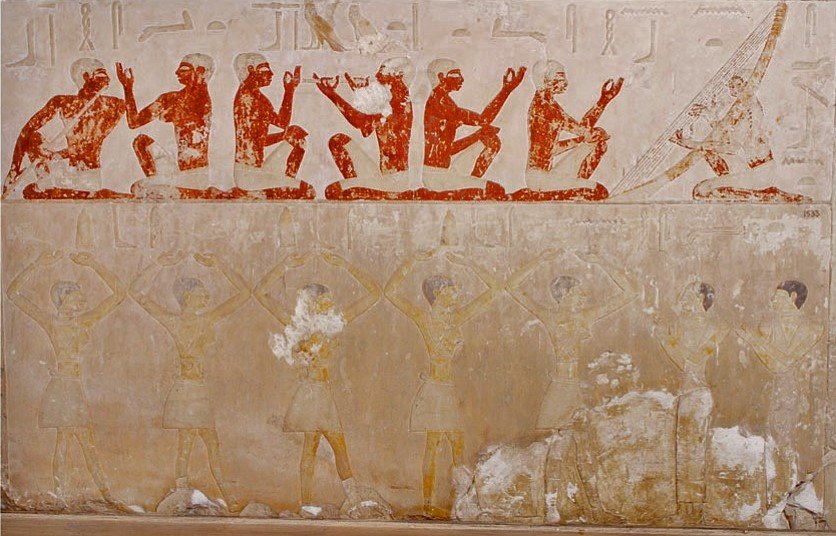
One of the most intriguing aspects of Egyptian music was its role in preparing the soul for the afterlife. The Egyptians were obsessed with immortality, and music played an important role in burial rites. When a person died, they were often buried with instruments, sometimes even an entire ensemble of musicians. It was believed that these instruments would help guide the soul of the deceased through the afterlife, creating a sense of protection and peace on their journey to the underworld.
Happy chants were especially important in these rites. They were intended to provide comfort and spiritual guidance. Here we see an interesting crossover of cultures: the living needed music to connect with the divine, and the dead needed it to ensure a smooth transition to the afterlife. In fact, the very concept of “spiritual sound” was central to the Egyptians’ beliefs in immortality. They viewed music as something that could go beyond the physical world and touch the realm of the divine and the eternal


