Early Dynastic Period – EGYPEDIA
HomePharaohs › Early Dynastic Period
3100 BC — 2686 BC

Early Dynastic
Period

The dawn of pharaonic civilization — when two ancient kingdoms became one empire, kings became gods, and Egypt wrote its name into eternity. Here, in the desert of Abydos, their tombs still stand.

414Years
2Dynasties
17+Known Kings
AbydosRoyal Necropolis
👑

Also Known As

The Archaic Period or Thinite Period — named after Thinis, the ancestral city of Egypt's first ruling families.

🏛️

Capital City

Thinis (early) → then Memphis — founded by Hor-Aha at the junction of Upper and Lower Egypt.

📜

Birth of Writing

Hieroglyphic script evolved from crude symbols into complete sentences. The first written history begins here.

⚰️

Royal Tombs

Umm el-Qa'ab necropolis at Abydos — burial ground of Egypt's very first god-kings.

🌊

Preceded by

Predynastic / Prehistoric Egypt — the Naqada III culture (c. 3200–3100 BC).

🔺

Followed by

The Old Kingdom — the Age of Pyramids (2686–2181 BC), beginning with the legendary Djoser.

𓂀
𓂀
Why "Early Dynastic"?

The term Early Dynastic Period was coined by modern Egyptologists to describe the first age of organized, hereditary royal rule in Egypt — when the concept of the dynasty first appeared in human history.

It is also known as the Thinite Period, after Thinis — ancestral homeland of Egypt's first two ruling families, believed to lie near Abydos in Upper Egypt. The name Archaic Period emphasizes how foundational this era was: the very concept of "Egypt" was invented here — a unified state with a divine king, a written language, centralized government, and a distinct artistic tradition.

A Word from the Ancient Priest Manetho

The Egyptian priest Manetho (3rd century BC) organized Egypt's rulers into "dynasties" in his work Aegyptiaca. His framework — Dynasties I through XXX — remains the backbone of Egyptology today. The Early Dynastic Period covers his Dynasties I and II.

Narmer Palette
The Narmer Palette (c. 3100 BC) — the world's oldest historical document, depicting the unification of Egypt under King Narmer. Cairo Egyptian Museum. Green schist, 64 cm tall.
𓃭
𓃭
Religion & Gods of the Early Dynastic Period

In the world's first nation-state, politics and religion were inseparable. The pharaoh was not merely a ruler — he was the living embodiment of Horus, the falcon-god, and the guardian of cosmic order.

The Pharaoh as Living God

The most radical invention of the Early Dynastic Period was not writing or monumental architecture — it was the concept of the divine king. The pharaoh was not simply chosen by the gods; he was a god incarnate — the living Horus on earth, and upon death, he became Osiris in the afterlife.

This theology gave the state absolute authority. Obeying the pharaoh was the same as obeying the cosmic order itself (the concept of Ma'at — truth, justice, and cosmic balance). Challenging the king was not just treason; it was sacrilege against the universe.

This idea — invented in Dynasty I and never abandoned for 3,000 years — is arguably the most influential political-religious concept in human history. Its echoes shaped the Roman Emperor-worship, the divine right of medieval European kings, and concepts of sacred leadership across the ancient world.

The Five Royal Names

During this period, the first royal titulary (set of official names) was developed. By Dynasty I, kings had three names; by the Old Kingdom all five were standard: Horus name (inside a serekh), Nebty name (Two Ladies — Nekhbet and Wadjet), Golden Horus, Nsw-Bity (King of Upper and Lower Egypt — first used by Den), and the Sa-Ra (Son of Ra — first used in Dynasty II by Nebra). Each name encoded a theological claim.

Narmer Palette — Horus Falcon
The Narmer Palette — the Horus falcon, symbol of the king's divine nature, dominates the composition. The king IS the falcon. Cairo Egyptian Museum, c. 3100 BC.
Den ivory label — Horus name serekh
King Den's ivory label — the serekh (palace façade enclosing the Horus name) is the earliest royal name format. British Museum, c. 2970 BC.
The Principal Gods of the Early Dynastic Period
𓅃
Horus
The Falcon God · God of Kings

The most important deity of the Early Dynastic Period. The living pharaoh was literally Horus incarnate — his name was written inside the serekh (palace façade) topped by a falcon. Cult center at Hierakonpolis (Nekhen).

🦅 Symbol: Falcon · 👑 Role: Divine Kingship, Sky, Victory
𓁣
Set (Seth)
God of Chaos · Rival of Horus

Set represented chaos, storms, and the desert — yet was also a powerful protector god. During Dynasty II, a faction of kings worshipped Set as supreme deity, causing a political-religious civil war. Khasekhemwy resolved this by uniting both gods in his name.

🌪️ Symbol: Set animal · ⚡ Role: Chaos, Power, War, Desert
𓁛
Osiris
God of the Dead · The Dead King

While the living king was Horus, the dead king became Osiris — god of the afterlife and resurrection. Osiris worship was closely tied to Abydos. King Djer's tomb was later venerated as the actual tomb of Osiris by generations of pilgrims.

☽ Symbol: Crook & Flail · 🌾 Role: Afterlife, Resurrection, Nile Flood
𓇯
Neith
Goddess of War & Weaving · The North

One of Egypt's most ancient goddesses, Neith was patron of the Delta (Lower Egypt). Her cult center was at Sais. Queen Meryt-Neith ("Beloved of Neith") was named after her. Many wives and officials of Dynasty I bore Neith-related names, reflecting her political importance in the north.

🏹 Symbol: Crossed arrows · 🧵 Role: War, Weaving, Wisdom, Delta
𓌀
Ptah
God of Craftsmen · Memphis

Creator-god of craftsmen, architects, and artists. Hor-Aha built the great Temple of Ptah at Memphis — making it the city's patron deity. Ptah was believed to have created the world through thought and speech alone. Memphis was called Hut-ka-Ptah ("Temple of the Soul of Ptah") — from which the word "Egypt" itself derives.

🔨 Symbol: Djed pillar · 🏙️ Role: Creation, Crafts, Memphis
☀️
Ra (Re)
The Sun God · Rising Power

Ra's importance grew steadily through the Early Dynastic Period. Dynasty II king Nebra was the first pharaoh to incorporate Ra into his royal name — a revolutionary moment in Egyptian theology. By the Old Kingdom, Ra would become the supreme deity, with pharaohs declaring themselves "Son of Ra."

🌞 Symbol: Solar disk · ☀️ Role: Sun, Creation, Kingship, Time
🦅
Nekhbet & Wadjet
The Two Ladies — Guardians of Egypt

Nekhbet (vulture goddess of Upper Egypt, Elkab) and Wadjet (cobra goddess of Lower Egypt, Buto) together formed the Nebty — the "Two Ladies" — guardian deities of the unified kingdom. King Adjib was the first to incorporate both into his royal titulary. The uraeus (rearing cobra) on the royal crown comes directly from Wadjet.

🦅🐍 Symbols: Vulture + Cobra · 👑 Role: Protection of the Two Lands
🐂
Apis Bull
The Sacred Bull of Memphis

The Apis Bull was a sacred bull kept in Memphis as a living manifestation of the god Ptah — and later Osiris. Hor-Aha organized the Apis Bull cult, making it one of Egypt's most enduring religious institutions. When an Apis Bull died, it was mummified with full royal honors and entombed in the Serapeum at Saqqara. The cult lasted from Dynasty I until the Roman Period — over 3,000 years.

🐂 Symbol: Black bull with white diamond · 🏛️ Role: Manifestation of Ptah/Osiris
⚔️ The Horus vs Set Conflict — Egypt's First Civil War

The most dramatic religious event of the Early Dynastic Period was the Horus-Set conflict of Dynasty II — Egypt's first known civil war, fought not just with weapons but with competing theologies.

The Dynasty I kings all used Horus as their divine identity. But around the middle of Dynasty II, a rival faction emerged that worshipped Set as supreme. Kings began using Set's image in their royal serekhs — a revolutionary break with tradition.

King Peribsen (c. 2850–2820 BC, not covered in this article) replaced the Horus falcon above his serekh entirely with the Set animal — the first and only Egyptian king to do this. His successor Khasekhemwy reconciled both cults: his serekh shows both Horus AND Set side by side — unique in all of Egyptian history.

What the Khasekhemwy Statues Tell Us

The seated statues of Khasekhemwy at Oxford's Ashmolean Museum are engraved with a remarkable inscription: "47,209 northern enemies slain." This is our only direct evidence of the scale of the civil war between Horus and Set factions — tens of thousands killed. The statues also show the king wearing both the White and Red Crowns — a visual symbol of reunification.

Why It Matters

The Horus-Set myth — the cosmic battle between order and chaos — was central to Egyptian religion for 3,000 years. Every pharaoh was Horus defeating Set. The Early Dynastic conflict gave this mythology its historical grounding: it really happened, and Egypt's civilization nearly collapsed because of it.

𓅓
The Birth of Hieroglyphic Writing

The world's first complex writing system did not appear fully formed — it was invented here, in this period, step by painstaking step. This is how humanity learned to write.

Before Writing: Symbols and Marks

Long before the first dynasties, Egyptians were already marking objects with symbols — potters' marks, ownership signs, and religious images scratched onto pottery. These were not yet writing: they conveyed no grammar, no syntax, no spoken language. They were pictures.

The leap from picture to writing — the ability to record language itself — happened gradually between approximately 3400 and 3100 BC. The earliest known examples of genuine hieroglyphic writing come not from a royal inscription, but from a forgotten tomb.

Tomb U-j at Abydos — World's Earliest Writing

In 1988, German archaeologist Günter Dreyer excavated Tomb U-j at Umm el-Qa'ab, Abydos — the burial of a pre-dynastic ruler called "Scorpion I," dating to approximately 3200 BC. Inside, he found something that changed our understanding of history: 200+ small ivory and bone labels, each bearing symbols.

These labels were attached to linen, oil, and food products — a royal inventory system. The symbols record place-names from which the goods were delivered. Critically, some signs are phonetic — they represent sounds, not just pictures. This makes them the oldest known examples of writing in the world, predating Mesopotamian cuneiform writing by a generation.

The Tomb U-j Discovery — What It Means

Before this discovery, scholars believed Mesopotamia invented writing first. Dreyer's 1988 find pushed Egypt's writing back by at least 150 years — and suggested Egyptian writing developed independently, not by borrowing from Mesopotamia. The debate continues, but Egypt's claim to independent invention is now taken seriously by the majority of Egyptologists.

Naqada label — earliest Egyptian writing
An early administrative label from the Naqada period — among the world's earliest writing. The symbols record place-names and quantities in an administrative context, c. 3200–3100 BC.
Ivory Label of King Den — first complete sentence
The Ivory Label of King Den (c. 2970 BC) — one of the world's earliest complete hieroglyphic sentences, recording a military campaign. British Museum. The jump from simple labels to full sentences took approximately 200 years.
𓂀 How to Read Hieroglyphs — The System Invented in This Era

Egyptian hieroglyphic writing uses three types of signs simultaneously. Understanding these three types unlocks the entire system — and they were all developed during the Early Dynastic Period.

① Logograms (Ideograms)
𓀀 𓆎 𓇋
Signs that directly represent the object or idea they depict. 𓀀 = a seated man. 𓆎 = a falcon (= Horus). 𓇋 = a reed (sounds like 'i'). The simplest type — picture means thing.
② Phonograms (Sound Signs)
𓄿 𓂋 𓈖
Signs that represent sounds, not meanings. 𓄿 = the sound "a" (from the word for vulture). 𓂋 = the sound "r" (from the word for mouth). 𓈖 = the sound "n". This phonetic system allowed Egyptians to write any word — the key innovation of Dynasty I.
③ Determinatives (Classifiers)
𓀜 𓇯 𓌀
Silent signs added at the end of a word to clarify its category. A word ending in 𓀜 (seated man) relates to men or occupations. 𓇯 (sky) appears after words about heaven. They eliminate ambiguity — written Egyptian has no vowels, so determinatives are essential guides.
How to Read the Narmer Palette — Step by Step
Step 1 — The Serekh
𓅃
At the top of the palette sits a rectangular frame (serekh) with a falcon on top. The falcon IS Horus. The frame represents a palace façade. Inside it: the king's Horus name, written in hieroglyphs — our first confirmed named ruler in history.
Step 2 — Hierarchical Scale
The king is drawn larger than every other figure. This is not artistic error — it is a visual statement of power. The bigger the figure, the more important. This convention, invented in this period, persisted in Egyptian art for 3,000 years without exception.
Step 3 — Reading Direction
Hieroglyphs can be read left-to-right, right-to-left, or top-to-bottom. The rule: animal and human signs always face the START of the text. If the falcon faces right, read right-to-left. This system was standardized during Dynasties I and II.
Step 4 — The Name "Narmer"
𓈖𓌀𓂋
N-r-mr: the catfish (nar) + chisel (mr) = "Narmer." This is the rebus principle — using pictures for their sound values to spell words. The same principle used in emoji today (🐝+🍃 = "be-leaf" = believe). Narmer's name is the world's oldest confirmed written name of a specific historical person.
The Evolution of Egyptian Writing — Early Dynastic Period
Date Development Evidence Significance
c. 3400–3200 BCProto-hieroglyphs — simple symbols on potteryNaqada II-III pottery marksPicture → symbol transition
c. 3200 BCFirst phonetic signs — sounds, not just picturesTomb U-j labels, Dreyer 1988World's oldest writing — possibly predates Sumer
c. 3100 BCRoyal name (serekh) system standardizedNarmer Palette, HierakonpolisFirst named individual in history
c. 2970 BCFirst complete sentences in hieroglyphsIvory Label of Den, AbydosLanguage fully recorded for first time
c. 2686 BCHieroglyphic system fully mature — 750+ signs in useOld Kingdom texts and inscriptionsSystem unchanged for next 2,500 years
𓃀
𓊹
𓃭
The Unification of the Two Lands

For centuries, two rival kingdoms occupied the Nile Valley. Then around 3100 BC, one warrior-king changed everything — giving birth to the greatest civilization the ancient world had ever seen.

Two Kingdoms, One Nile

Before unification, the Nile Valley was divided into two distinct kingdoms:

  • Upper Egypt (South): White Crown, Lotus Flower emblem, goddess Nekhbet (vulture), capital at Nekhen (Hierakonpolis).
  • Lower Egypt (North / Delta): Red Crown, Sedge Plant emblem, goddess Wadjet (cobra), capital at Putuo (Pe / Buto).

King Narmer — The First Pharaoh

Around 3100 BC, King Narmer of Upper Egypt conquered Lower Egypt and united both lands under the Double Crown (Pschent). He became the first ruler to hold the titles: King of the Two Lands, Owner of the Two Crowns, Eagle of the South, Serpent of the North.

This achievement is commemorated on the Narmer Palette — the oldest known historical document showing a named individual performing a documented act. On one face, Narmer wears the White Crown; on the other, the Red Crown of the conquered north.

The Four Pre-Dynastic Civilizations

These eras were preceded by four great prehistoric cultures, chronicled by the Egyptian scholar Selim Hassan in his encyclopedia on the history of Egypt:

  • Marmada Beni Salama (c. 4400 BC) — Western Delta, 50 km northwest of Cairo. Dead buried facing east. A relatively obscure civilization.
  • Deir Tassa (c. 4800 BC) — Eastern Nile bank, Badari district, Assiut. Dead shrouded in animal skins and buried facing west. Known for distinctive black-top pottery.
  • Badari (c. 4500 BC) — Assiut Governorate. Dead buried with many utensils. First appearance of copper tools and wooden beds.
  • Naqada (c. 4000–3100 BC) — Qena Governorate. Divided into Naqada I, II, and III. Distinguished by economic progress and art. Naqada III directly preceded the Early Dynastic Period.

The unification was likely a gradual process over generations, driven by economic growth, as Upper Egypt systematically absorbed Delta lands through trade, diplomacy, and eventual military dominance (Brewer, 142).

Mediterranean Sea LOWER EGYPT Nile Delta · Capital: Buto (Pe) 🔴 Nile River UPPER EGYPT Nile Valley · Capital: Nekhen Memphis Abydos Nekhen (Hierakonpolis) Red Sea First Cataract — Aswan (Southern Boundary) c. 3200 BC — Before Unification
Map of the Two Kingdoms before unification (c. 3200 BC). Upper Egypt (south, red — White Crown) and Lower Egypt (north, delta — Red Crown). Narmer conquered northward to unite both under one crown.
Narmer Palette — Unification of Egypt c. 3100 BC
The Narmer Palette (c. 3100 BC) — on one face Narmer wears the White Crown of Upper Egypt; on the other the Red Crown of Lower Egypt — the oldest recorded depiction of a king ruling both lands. Cairo Egyptian Museum.
𓏏
𓅓
Key Events & Achievements
c. 3100 BC
Unification of Egypt — King Narmer defeats Lower Egypt and unites the Two Lands under one crown. Memphis is founded as the new capital. The age of the pharaohs begins.
c. 3100–3050 BC
Dynasty I Established — Hor-Aha consolidates power, founds Memphis, builds the temple of Ptah, and establishes the Apis Bull cult. The royal necropolis at Umm el-Qa'ab, Abydos becomes Egypt's sacred burial ground for divine kings.
c. 3050–2990 BC
Cultural Explosion — Hieroglyphic writing evolves rapidly. A distinct Egyptian artistic canon emerges. Trade networks expand to Canaan, Nubia, and the Lebanese coast. Expeditions reach Sinai, Libya, and the Red Sea.
c. 2990 BC — ~50 years
King Den's Golden Age — The greatest ruler of Dynasty I introduces the title Nsw-Bity, the first granite architecture, history's first recorded census, and the first complete hieroglyphic sentences. He leads campaigns into Sinai and the Near East.
c. 2890–2686 BC
Dynasty II — Turbulence & Renewal — Power struggles between cults of Horus and Set. The first king to use Ra in his name (Nebra) signals the dawn of solar religion. King Khasekhemwy eventually reunites Egypt, combining both gods in his name.
c. 2686 BC
End of the Early Dynastic Period — Khasekhemwy's heir Djoser inherits a united Egypt and commissions architect Imhotep to build the world's first stone monument: the Step Pyramid of Saqqara — ushering in the Old Kingdom.
𓁹
𓋹
Visual Timeline — 414 Years of History

Scroll through every king and major event of the Early Dynastic Period — from the first unification stroke to the last breath before the Age of Pyramids.

c. 3200 BC
Pre-Dynastic
Naqada III & Earliest Writing
Tomb U-j at Abydos — world's earliest hieroglyphic labels. Egypt on the verge of unification.
c. 3100 BC
⭐ Major Event
Narmer Unifies Egypt
First pharaoh wears the Double Crown. World's first nation-state. Narmer Palette created.
c. 3100–3050 BC
Dynasty I · King 2
Hor-Aha
Founds Memphis "The White Wall." Builds Temple of Ptah. Establishes Apis Bull cult.
c. 3050–2990 BC
Dynasty I · King 3
Djer (~41 yrs)
Campaigns to Nubia, Libya, Sinai. Rules to Second Cataract. Tomb later venerated as Osiris's.
c. 2990 BC
Dynasty I · King 4
Djet "The Serpent"
Leads Red Sea mining expeditions. His stela is now a Louvre masterpiece.
c. 2980 BC
👑 First Female Ruler
Queen Meryt-Neith
First woman to rule Egypt. Two royal tombs and a solar boat — honors reserved for kings.
c. 2970–2920 BC
⭐ Greatest of Dyn. I
Den (~50 yrs)
First Nsw-Bity title. First granite architecture. First census. First complete hieroglyphic sentences.
c. 2920–2910 BC
Dynasty I · King 7
Adjib "Bold Heart"
Introduces the "Two Lords" name (Horus+Set). Name later erased by his successor.
c. 2910–2900 BC
Dynasty I · King 8
Semerkhet
"Companion of the Gods." First unified burial tomb design. Omitted from Saqqara King-List.
c. 2900–2890 BC
End of Dynasty I
Qa'a — Last of Dynasty I
King-list seal impressions. Saqqara tomb 65×37m. Power shifts fully to Memphis.
DYN II
c. 2890–2870 BC
Dynasty II · King 1
Hotepsekhemwy
"Two Powers at Peace." First king buried at Saqqara, breaking Abydos tradition.
c. 2870–2850 BC
☀️ Solar Revolution
Nebra "Ra is Lord"
First king to use Ra's name. Launches 2,500 years of solar theology in Egypt.
c. 2720–2686 BC
⭐ Greatest of Dyn. II
Khasekhemwy
Reunites Egypt. Builds Shunet el-Zebib. Predecessor of Djoser & the Step Pyramid.
c. 2686 BC
→ Old Kingdom Begins
Djoser's Step Pyramid
World's first stone monument. Architect Imhotep. Saqqara. The Age of Pyramids begins.
⭐ Greatest Kings
Dynasty I Kings
Dynasty II Kings
Female Ruler
Major Events
← Scroll to explore →
𓂀
𓂀
King Comparison Table

All 11 rulers of the Early Dynastic Period — sortable by dynasty, reign length, location, and key achievement. Click any column header to sort.

Sort by:
# King Dynasty Dates Approx. Reign Tomb Key Achievement Rating
⭐ = Exceptional reign · Sources: Wilkinson (1999), Shaw (2000), Petrie (1900–1901), Dreyer (1975–present)
𓃭
𓊹
The Kings of the Early Dynastic Period

Egypt's first god-kings — rulers who were human by birth but divine by decree, governing a civilization that had never existed before.

Dynasty I  ·  c. 3100 – 2890 BC  ·  Capital: Thinis → Memphis
I
Narmer (Menes)
c. 3100 BC · Founder of Dynasty I · Unifier of Egypt
Narmer Palette
Narmer is the First Dynasty's first king whose name appears on later King Lists and classical sources. In their own time, kings were mostly known by their Horus names rather than birth names — which is why the identification of "Menes" remains debated. He is most likely the same as Hor-Aha, whose reign dates back to the earliest tomb at Saqqara. We are still uncertain whether Narmer, Menes, and Hor-Aha refer to one, two, or three different persons.

Narmer defeated the chieftains of the Nile Delta and created the world's first unified nation-state. His greatest legacy is the Narmer Palette — the earliest confirmed image of a named historical ruler performing a documented political act. His tomb was located at Abydos; objects from his reign were found in the temples of Nekhen, Hierakonpolis, and Kom el-Ahmar.
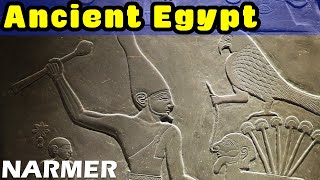
👑 First Pharaoh 🗡️ Unifier of Egypt 📜 Narmer Palette 🏛️ Tomb: Abydos
Watch Narmer documentary
Watch
II
Hor-Aha — "The Fighter"
c. 3100–3050 BC · First Confirmed King of Dynasty I · Founder of Memphis
Naqada Label — artifact from Hor-Aha's reign
The name "Hor-Aha" means The Fighter. His monuments reference wars against the Libyans and Nubians, and religious ceremonies including his coronation. He chose Memphis as his capital — strategically positioned at the junction of Upper and Lower Egypt, known as "The White Wall."

He built a great temple to the god Ptah, organized the cult of the Apis Bull, established trade relations with Syria and Palestine, defeated the Nubians (extending rule to the First Cataract), and inaugurated the cult of the crocodile-god Sobek in the Faiyum. He pursued a policy of conciliation with the North, evidenced by his wife Neith-hotep (whose name derives from the Delta goddess Neith). He had two tombs: one at Saqqara and one at Abydos.
🦅 "The Fighting Hawk" 🏙️ Founded Memphis 🐊 Cult of Sobek (Faiyum) ⚔️ Defeated Nubians & Libyans
Watch Hor-Aha documentary
Watch
III
Djer
c. 3050–2990 BC · Reign: ~41 years · Son of Hor-Aha
Tomb stela of Djer
Djer's reign is characterized by foreign policy expansion — expeditions to Nubia, Libya, and Sinai. He extended Egypt's rule as far south as the Second Cataract, recorded on a sandstone slab at Gebel Sheikh Suliman (11 km south of Wadi Halfa, now in Khartoum museum). He built a palace at Memphis and his great tomb at Abydos.

His reign was a time of great prosperity as evidenced by the funerary furniture found in contemporaries' tombs. In a remarkable twist, later Egyptians believed his Abydos tomb to be the tomb of Osiris himself — making pilgrimages and offerings there for centuries until archaeology revealed the truth. His daughter was Queen Meryt-Neith. He had two major tombs: Abydos and Saqqara.
🗡️ Nubia, Libya & Sinai 📍 Rule to Second Cataract ⚰️ Mistaken for Tomb of Osiris 🏛️ Two Tombs: Abydos & Saqqara
Watch Djer documentary
Watch
IV
Djet (Wadjet / Zet) — "The Serpent"
c. 2990 BC · Son of Djer
Stela of King Djet - Louvre
His name means Serpent. Djet led an expedition to the Red Sea to exploit mines in the Eastern Desert — his name was found engraved on rocks along the route connecting Edfu to the Red Sea, among Egypt's earliest evidence of organized mining expeditions.

His tomb at Abydos contained a magnificent limestone stela inscribed with his Horus name — now in the Louvre Museum, Paris — considered a masterpiece of early Egyptian art. Two tombs at Abydos and Saqqara, plus a third at Nazlet el-Batran near Giza (likely a high official). Throughout his reign, Egypt achieved a high degree of progress.
🐍 "The Serpent" 🎨 Masterwork Stela — Louvre ⛏️ Red Sea Mining Expeditions 🏛️ Three Tomb Sites
Watch Djet documentary
Watch
V
Queen Meryt-Neith — "Beloved of Neith"
c. 2980 BC · First Female Ruler of Egypt · Wife of Djet · Mother of Den
Stele of Queen Meryt-Neith
Queen Meryt-Neith is the first queen who ruled as king over Egypt. Her name is associated with the goddess Neith. She had two enormous royal tombs — one at Saqqara and one at Abydos — along with a solar boat, an honor reserved exclusively for kings.

The debate over her status began in 1900 AD when her tomb was discovered among kings' tombs at Abydos, initially mistaken for a male king's name. Seals bearing Den's name inside suggest she was his mother and regent. She is the only woman known to have had two royal tombs and a solar boat — she was almost certainly a ruler or co-regent, not merely a consort. Manetho does not name her but counts eight First Dynasty pharaohs — which is only correct if she is included.
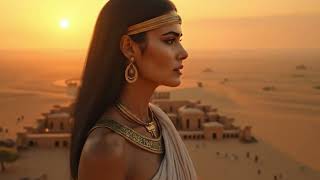
👸 First Female Ruler ⚓ Solar Boat — Royal Honor 🏛️ Two Royal Tombs 🌀 Beloved of Goddess Neith
Watch Meryt-Neith documentary
Watch
Den — Udimu
c. 2970–2920 BC · Greatest King of Dynasty I · Reign: ~50 years
Ivory Label of King Den
At the start of his reign, Den curbed the dangerous power of High Court officials that had grown during Meryt-Neith's regency. He launched an 'Asiatic' campaign in his first year, conducted an expedition into Sinai against the Bedouins, and brought back a harem of female prisoners (a practice later copied by Amenhotep III).

Den was the first king to use the title Nsw-Bity ("King of Upper and Lower Egypt") — carried by every pharaoh for the next 3,000 years. He created the office of "Chancellor of the King of Lower Egypt." His tomb at Abydos features the first known use of granite in construction anywhere in Egypt. His ~50-year reign is documented on the Palermo Stone, ivory labels, and jar-sealings. He also conducted history's first recorded census of the population and cattle.
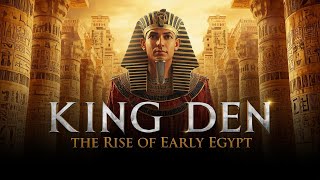
⭐ Greatest of Dynasty I 👑 First to Use Nsw-Bity Title 🪨 First Granite Architecture 📜 First Complete Hieroglyphic Sentences 📊 First Recorded Census in History
Watch King Den documentary
Watch
VI
Adjib (Anedjib) — "The Bold Heart"
c. 2920–2910 BC · Also known as Merpubia
The name "Adjib" means the one with the bold heart. His throne name as King of Upper and Lower Egypt was Merpubia. He probably ascended to the throne late in life, after the unusually long reign of Den created a difficult succession environment.

It was during Adjib's reign that the 'Two Lords' name was introduced — placed under the joint protection of Horus and Seth, re-uniting the two divine antagonists of North and South in the king's person. This was a major theological and political innovation. However, his successor Semerkhet erased his name from jubilee vases, suggesting his legitimacy was contested.
💪 "The Bold Heart" 🦅🐍 First "Two Lords" Title ⚠️ Name Erased by Successor
Watch Adjib documentary
Watch
VII
Semerkhet — "Companion of the Gods"
c. 2910–2900 BC · Nebty name: "He whom the Two Mistresses guard"
His Horus name was 'Companion of the Gods' and his Nebty name 'He whom the Two Mistresses guard.' Semerkhet deliberately erased Adjib's name from his jubilee vases to assert his own legitimacy — yet his own name was omitted from the Saqqara King-List, suggesting he too was seen as problematic by later generations.

His titles indicate a possible prior priestly career before ascending the throne. His tomb at Abydos was the first royal tomb in which all subsidiary burials were enclosed within the same structure as the king himself — a significant architectural innovation that influenced later burial practices.
🙏 "Companion of the Gods" ⚠️ Omitted from Saqqara King-List 🏗️ Unified Burial Architecture
Watch Semerkhet documentary
Watch
VIII
Qa'a (Qa-aa) — "His Arm is Raised"
c. 2900–2890 BC · Last King of Dynasty I
Restored tomb stele of Qa'a
The last ruler of the First Dynasty. His tomb at Abydos yielded jar sealings and labels bearing his Horus name. His Saqqara tomb — unearthed in 1954 — was a vast building measuring 65 × 37 meters, providing rich details on high officials and Egypt's administrative system: supervisors of irrigation, tax collection, and registration of state events.

His extraordinary king-list seal impressions list all his predecessors — our most accurate record of Dynasty I succession. After his death, Egypt entered a succession struggle. The first three kings of Dynasty II were buried at Saqqara, confirming that power had fully shifted to Memphis.
📜 King-List Seal Impressions 👑 Last of Dynasty I 🏛️ Saqqara Tomb: 65 × 37 m 📊 Rich Administrative Records
Watch documentary
Watch
Dynasty II  ·  c. 2890 – 2686 BC  ·  Capital: Memphis · Saqqara Necropolis
I
Hotepsekhemwy
c. 2890–2870 BC · "The Two Powers Are at Peace" · Founder of Dynasty II
The founder of Dynasty II subdued princes who fought over Qa'a's throne. His very name — "The Two Powers Are at Peace" — encapsulates his political mission: to heal the growing rift between followers of Horus and Set. An inscription near Qa'a's tomb implies he oversaw Qa'a's burial before the succession war broke out.

He was the first king buried at Saqqara rather than Abydos — a decisive break with First Dynasty tradition, signaling the full shift of royal authority to Memphis. The next two kings of Dynasty II were also buried at Saqqara.
🕊️ Restored Peace After Conflict 🏛️ First Royal Burial at Saqqara 🔄 Ended Abydos Royal Tradition
Watch documentary
Watch
II
Nebra (Raneb) — "Ra is Lord"
c. 2870–2850 BC · "Lord of the Sun"
Nebra is historically significant as the first pharaoh to incorporate the sun-god Ra into his royal name — a theological innovation that would become universal among Egyptian kings. This single naming decision set Egypt on a solar path lasting 2,500 years: from the solar temples of Dynasty V through the radical monotheism of Akhenaten.

His reign appears to have been peaceful and prosperous. His name itself — "Ra is Lord" — reflects the rising dominance of solar religion that would define much of pharaonic theology.
☀️ First King to Use "Ra" in His Name 🌅 Dawn of Solar Theology in Egypt
Watch documentary
Watch
Khasekhemwy — "The Two Powers Appear"
c. 2720–2686 BC · Last and Greatest King of Dynasty II
The final and most powerful ruler of Dynasty II, Khasekhemwy brought Egypt through its gravest political crisis. He reunited the country after prolonged civil conflict between Horus and Set factions. His original name Khasekhem was changed to Khasekhemwy after reunification — and uniquely in Egyptian history, both Horus AND Set appear together in his serekh, symbolizing the reconciliation of the two rival cults.

He commissioned Egypt's largest mud-brick structure at Abydos — the Shunet el-Zebib ("Storehouse of Raisins") — which still stands today as one of the world's oldest surviving monuments. His daughter Nimaathap married into the next dynasty, and his successor Djoser built the Step Pyramid just years after his death — beginning the Old Kingdom.
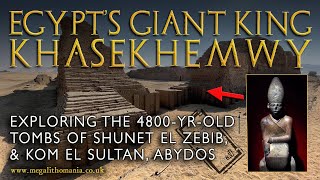
⭐ Greatest of Dynasty II 🕊️ United Horus & Set 🏗️ Shunet el-Zebib — Still Standing 👴 Preceded Djoser & the Step Pyramid
Watch Khasekhemwy documentary
Watch
𓌀
𓁹
Key Artifacts of the Era

Objects that survived 5,000 years to tell us the story of Egypt's birth.

Narmer Palette — Cairo Museum
Cairo Museum

The Narmer Palette

World's oldest historical document. Green schist (64cm) depicting Narmer unifying Egypt, c. 3100 BC. Discovered at Hierakonpolis, 1898.

Stela of King Djet — Louvre
Louvre, Paris

Stela of King Djet

Masterpiece of early Egyptian art — limestone stela depicting the king's serpent Horus name. From Abydos, c. 2990 BC.

Tomb stela of King Djer — Cairo Museum
Cairo Museum

Stela of King Djer

Tomb stela of Djer from the royal necropolis at Abydos. His reign lasted ~41 years and his tomb was later venerated as the tomb of Osiris himself.

Ivory Label of King Den — British Museum
British Museum

Ivory Label of King Den

One of the world's earliest complete hieroglyphic sentences, recording a military campaign into Sinai, c. 2970 BC.

Restored Stela of Qa'a — Egyptian Museum Cairo
Egyptian Museum, Cairo

Restored Stela of Qa'a

Restored tomb stele of Qa'a — last king of Dynasty I. His Saqqara tomb measured 65×37 meters and held rich administrative records.

Stele of Queen Meryt-Neith — Egyptian Museum Cairo
Egyptian Museum, Cairo

Stele of Queen Meryt-Neith

One of two stelae from the tomb of Queen Meryt-Neith at Abydos — Egypt's first female ruler, c. 2980 BC.

𓈖
Daily Life in Early Dynastic Egypt

Behind every pyramid, every palette, every royal tomb — there were thousands of farmers, craftsmen, scribes, and priests whose lives made the pharaohs possible. This is their story.

The Social Pyramid

Early Dynastic Egyptian society was rigidly hierarchical — but not a caste system. Talented individuals could rise. The hierarchy was organized around the concept of service to the king, who was himself in service to the gods and to Ma'at (cosmic order).

  • The Pharaoh — Living god, owner of all land, all people, all cattle. His word was law because it was divine decree.
  • Royal Family & High Officials — Princes, viziers, chancellors. The tomb of Hemaka (Den's chancellor) at Saqqara was larger than many kings' tombs.
  • Priests & Scribes — The literate class. Scribes administered the state; priests managed the gods' estates and performed rituals that maintained cosmic order.
  • Craftsmen & Artists — Specialized workers in stone, metal, pottery, and linen. Highly skilled and relatively well-compensated in food and housing.
  • Farmers — The vast majority of the population. They worked the Nile floodplain and owed labor service (corvée) to the state during flood season.

Was There Slavery in Early Dynastic Egypt?

True chattel slavery — owning a person as property — was rare in the Early Dynastic Period. Most workers were free peasants who owed labor service to the crown (similar to medieval serfdom). War captives could become unfree workers, but the institution of slavery as understood in the Roman world did not exist here. The retainer burials (servants killed to accompany the king in death) represent a different, earlier concept of servitude that largely disappeared by Dynasty II.

What Did They Eat?

The Nile flood guaranteed Egypt extraordinary agricultural productivity. The basic diet was built around two staples that never changed throughout the pharaonic era:

  • Bread (aish) — made from emmer wheat, baked in clay moulds. Archaeological evidence shows at least 30 varieties of bread in Dynastic Egypt. Workers received bread rations as wages.
  • Beer (henqet) — thick, nutritious, low-alcohol. Brewed from partially baked bread dissolved in water. The workers who built the royal tombs received beer as part of their daily rations.

Beyond the staples: lentils, onions, garlic, leeks, figs, dates, pomegranates, and cucumbers. Fish from the Nile (dried or salted for preservation) was a crucial protein source. Cattle, sheep, and goat meat was available but primarily reserved for elite tables and religious offerings. Honey was the only sweetener.

Housing & Village Life

Most Egyptians lived in rectangular mud-brick houses of two to four rooms — the same material as the great royal enclosures, just on a much smaller scale. Villages clustered near the Nile floodplain, above the flood line. A typical family home had a central living room, a sleeping room, a storage area, and a flat roof used for sleeping in summer. Livestock was kept in an adjacent pen.

👩 Women in Early Dynastic Egypt

Egyptian women had more legal rights than women in contemporary Mesopotamia, Greece, or Rome. A woman could own property, initiate divorce, inherit, conduct business, and bring lawsuits. This was not equality by modern standards — the public world was male-dominated — but private and economic autonomy was significant.

The supreme example: Queen Meryt-Neith ruled as king in her own right (c. 2980 BC) — a thousand years before any European queen regnant. Her two royal tombs and solar boat are evidence that female leadership, while exceptional, was not unthinkable in Early Dynastic Egypt.

Source: Robins (1993), "Women in Ancient Egypt"
⚒️ The Craftsmen — Egypt's True Architects

The artisans who shaped Egypt's material culture were organized into workshops (per-nefer, "house of gold") directly connected to the royal court or temple. Specialized crafts included: stone-vessel carvers (Egypt produced thousands of beautiful alabaster vessels in this period), copper-smiths (copper tools appear consistently from Dynasty I), potters, linen weavers, and boat-builders.

Tomb goods of Dynasty I officials show extraordinary craftsmanship — inlaid game boards, copper vessels, carved ivory objects. This was not primitive workmanship; the royal workshops were producing work of near-modern technical sophistication.

Source: Emery (1961), "Archaic Egypt," Ch. 4
⚕️ Health, Medicine & Death

Life expectancy was approximately 30–35 years at birth — but this figure is distorted by very high infant and child mortality. Those who survived childhood could live to 50 or beyond. Skeletal evidence from Early Dynastic cemeteries reveals: arthritis (from agricultural labor), dental wear (from grit in bread), and healed bone fractures (evidence of medical treatment).

The earliest medical texts come from the Old Kingdom, but medical practice clearly existed in the Early Dynastic Period. Physicians were already present in the royal court. Honey (as an antimicrobial) and castor oil were among the earliest known medicines.

Source: Nunn (1996), "Ancient Egyptian Medicine"
Trade & the Economy

Egypt had no coin currency — the economy operated on barter and ration systems. Workers were paid in bread, beer, oil, linen, and occasionally copper. The state redistributed agricultural surplus through a centralized bureaucracy — the world's first command economy.

External trade was equally remarkable. Seal impressions and pottery found at Palestinian sites (En Besor, Tel Erani) prove Egyptian trading colonies existed in Canaan. Lebanese cedar arrived via sea. Nubian gold, ivory, and exotic animals came north. Sinai yielded copper and turquoise. Egypt was not isolated — it was the center of a regional trading network from its very first days.

Source: Wilkinson (1999), pp. 157–168
🌊 The Nile — The Engine of Everything

Egyptian life was entirely organized around the Nile's annual flood cycle — the three seasons that governed everything: Akhet (inundation, June–September) when the Nile flooded and deposited rich black silt; Peret (growing season, October–February) when crops were planted and grew; Shemu (harvest, March–May) when crops were gathered and stored.

During Akhet, when fields were flooded, agricultural workers were available for state projects — building royal tombs, transporting stone, constructing mud-brick enclosures. This is why Egypt's monuments exist: the Nile flood created a guaranteed annual labor surplus that the pharaoh could direct.

Source: Brewer (2005), "Ancient Egypt: Foundations of a Civilization," Ch. 2
🎭 Entertainment, Music & Leisure

The tomb of Hemaka (official of King Den) at Saqqara contained the world's oldest known board game pieces — spool-shaped tokens in two colors, likely for a proto-Senet game. Senet would become Egypt's most popular game, played for the next 3,000 years. Music was central to ritual and celebration — harps, flutes, and percussion instruments appear in later artistic records.

Feasting was the primary form of elite entertainment. Beer and wine (imported from Palestine and the Delta) flowed at court banquets. The earliest known wine cellar in Egypt dates to Dynasty I at Abydos — 700 amphorae of Palestinian wine imported for the royal court.

Source: Emery (1961); McGovern et al. (2009) on ancient wine
𓆓
𓆓
Egypt & Mesopotamia — The World's First Two Civilizations

Every educated reader asks the same question when they encounter Early Dynastic Egypt: "How does this compare to Mesopotamia? Who came first? Who influenced whom?" Here is the honest, nuanced answer.

The Question of "First"

The question "which civilization came first?" is more complicated than it sounds, because "civilization" is not a single threshold — it is a cluster of developments (cities, writing, state organization, monumental architecture) that emerged at different rates in different places.

In Mesopotamia (modern Iraq), the Uruk Period (c. 4000–3100 BC) saw the world's first cities, the first temples, and the earliest proto-cuneiform writing (c. 3400 BC). In Egypt, the Early Dynastic Period (c. 3100 BC) saw the world's first unified nation-state, the first individual named in writing, and a writing system that may have emerged independently at roughly the same time.

Neither civilization "came first" in every respect. They were broadly contemporary — two separate experiments in civilization happening simultaneously, about 2,000 kilometers apart, with occasional contact but fundamentally different solutions to the same challenge: how do you organize and govern a large, complex society?

Did They Influence Each Other?

Yes — but less than you might think, and mostly in one direction. Archaeological evidence shows that Mesopotamian artistic motifs (the "master of animals" image, intertwined serpents, cylinder seals) appear in Egyptian material culture during Naqada III (c. 3300–3100 BC) — the period just before unification.

This is called the "Mesopotamian influence" phase — a short window when Mesopotamian prestige goods and motifs were adopted by Egyptian elites, possibly through trade contact via the Levant. The Narmer Palette itself shows some Mesopotamian-style imagery (elongated necks of serpopards), though its meaning and context are purely Egyptian.

After unification, however, Egypt turned inward. The pharaonic civilization that emerged from 3100 BC onwards was genuinely original — its art, religion, writing system, and political ideology were distinctly Egyptian, not borrowed. This is the consensus of modern Egyptology (Midant-Reynes 2000, Wilkinson 1999).

The Writing Question

For decades, Egyptologists assumed Egypt borrowed the idea of writing from Mesopotamia. Dreyer's 1988 discovery at Tomb U-j challenged this. The Egyptian signs function differently from Mesopotamian cuneiform: they were phonetic from very early on, whereas cuneiform began purely logographic. Most scholars now believe Egyptian writing developed independently, possibly stimulated by contact with the idea of writing (from Mesopotamia) but not by borrowing the signs themselves.

Egypt vs Mesopotamia — Side by Side Comparison
Category 🇪🇬 Egypt (Early Dynastic) 🏛️ Mesopotamia (Uruk/Early Dynastic)
Datesc. 3100–2686 BC (Early Dynastic); predynastic roots to 5500 BCUruk period c. 4000–3100 BC; Early Dynastic Mesopotamia c. 2900–2350 BC
GeographyThe Nile Valley — a narrow green ribbon through desert; naturally defensible, highly productiveTigris-Euphrates floodplain — flat, open, difficult to defend; multiple competing cities
GovernmentOne divine king — absolute centralization. The pharaoh owns everything. No rival city-states.City-states with separate rulers (lugals). Power fragmented. Wars between cities were constant.
WritingHieroglyphs — phonetic from very early. Used for administration, royal names, royal commemorations.Cuneiform — began as accounting tokens, evolved into literature (Gilgamesh). Clay tablets.
ReligionThe king IS a god (Horus). Death leads to eternal life for the prepared. Ma'at (cosmic order) is the supreme value.Gods are distant, unpredictable. Humans are servants of the gods. Death is a gloomy shadow-existence.
ArchitectureMud-brick mastabas and enclosures in this period; stone begins c. 2670 BC (Djoser). Built to last eternally.Mud-brick ziggurats — massive but not built for permanence. No stone available nearby.
TradeState-controlled. Lapis lazuli from Afghanistan via Levant; cedar from Lebanon; gold from Nubia.Merchant-driven. Extensive private trade networks. Earliest known contracts and commercial law.
LegacyEgyptian civilization endured essentially unchanged for 3,000 years — the longest-lasting culture in human history.Mesopotamian civilizations rose and fell rapidly (Sumer, Akkad, Babylon, Assyria). More dynamic, less stable.
𓂋
𓂋
Scholarly Debates — What We Don't Know

Good history distinguishes between established fact and ongoing debate. These are the major unresolved questions about the Early Dynastic Period that scholars are still arguing about today.

Active Debate Was "Menes" the same person as Narmer — or Hor-Aha?
The Evidence

Ancient classical sources (Manetho, Herodotus) name "Menes" as the first king and unifier of Egypt. But "Menes" never appears in contemporary inscriptions. The earliest king-name we find in Dynasty I contexts is either Narmer (on the Narmer Palette) or Hor-Aha (on ivory labels). Some scholars argue Menes = Narmer (they performed the same unification); others argue Menes = Hor-Aha (whose Horus name contains a possible phonetic equivalent); still others argue Menes is a legendary composite, not a historical individual.

Scholarly Positions
Narmer = Menes: Wilkinson (1999), Midant-Reynes (2000). The Narmer Palette depicts the unification event described in classical sources.
Hor-Aha = Menes: Emery (1961). The Saqqara tomb confirms his reign; his name may encode "Men-."
Menes is legendary: Dreyer (1992). The U-j tomb evidence pushes Egyptian history earlier; "Menes" may be a retrospective invention.
Current consensus: Narmer is most likely Menes, but this is not settled. We may never know.
Active Debate How long did King Den actually reign?

Ancient historian Manetho gives Den a reign of 20 years. But archaeological evidence — the sheer number of his seal impressions, ivory labels, tomb goods, and officials' tombs — suggests a much longer reign. Egyptologist Toby Wilkinson (1999) proposes approximately 50 years; other scholars suggest 30–40. This matters because it affects the entire chronology of Dynasty I.

Manetho
20 yrs
Wilkinson (1999)
~50 yrs
Shaw, ed. (2000)
~46 yrs
Radiocarbon avg.
Uncertain
Active Debate Did writing develop independently in Egypt — or was it borrowed from Mesopotamia?

For most of the 20th century, Egyptologists assumed Egypt borrowed the concept of writing from Mesopotamia, where proto-cuneiform appeared slightly earlier (c. 3400 BC). Dreyer's 1988 Tomb U-j discovery complicated this: the Egyptian phonetic signs function completely differently from Mesopotamian logograms, suggesting independent invention. The current scholarly debate: was it (a) fully independent; (b) stimulated by Mesopotamian contact (the idea of writing spread, not the signs); or (c) a hybrid? Most scholars today lean toward option (b), but (a) has significant supporters.

Bottom line: Egyptian writing is almost certainly not copied from Mesopotamia. Whether the idea of writing itself diffused is debated but cannot be proven either way with current evidence. (Baines 2004; Dreyer 1998; Woods 2010)
Settled (mostly) Was the retainer sacrifice voluntary?

The subsidiary burials around kings' tombs (36 with Hor-Aha, 318 with Djer) have been interpreted as human sacrifice — retainers killed to accompany the king. Analysis of skeletal remains (Wengrow 2006) shows no evidence of violent death in most cases — no blade marks, no trauma. The current scholarly view is that these individuals may have died naturally (perhaps through drugging or strangulation, leaving no skeletal mark) or that their deaths were ritually "timed" to coincide with the king's. The practice disappears entirely by Dynasty II, suggesting it was recognized as costly and abandoned as the state became more sophisticated. (Sources: Wengrow 2006; O'Connor 2011)

𓋴
𓋴
𓌀
Archaeological Sites & Monuments

The physical places where the story of Egypt's first dynasties was written in stone, mud-brick, and sand — and where archaeologists continue to uncover new chapters today.

Abydos, Upper Egypt
Umm el-Qa'ab
"Mother of Pots" · Royal Necropolis

The primary royal burial ground of Egypt's first kings, located at Abydos in Upper Egypt. Named after the millions of pottery offerings left by ancient pilgrims over centuries, Umm el-Qa'ab contains the tombs of all eight kings of Dynasty I — from Narmer to Qa'a — as well as several Dynasty II rulers.

Excavated first by Émile Amélineau (1895–1898) and then scientifically by Flinders Petrie (1899–1900), the site revealed the complete succession of early pharaohs. German archaeologist Günter Dreyer began new excavations in 1975 that continue to yield extraordinary finds — including the world's earliest writing, dating to c. 3200 BC.

🏛️ Dynasty I & II Royal Tombs 📜 World's Earliest Writing 🔍 Active Excavations
Abydos, Upper Egypt
Shunet el-Zebib
"Storehouse of Raisins" · c. 2686 BC

Commissioned by King Khasekhemwy, the last ruler of Dynasty II, this massive mud-brick enclosure is one of the world's oldest standing monuments. Its outer walls — still rising to 11 meters in places — enclose an area of approximately 123 × 77 meters, making it the largest mud-brick structure of the Early Dynastic Period.

The structure served as a funerary enclosure — a place for ritual and offering connected to the king's tomb. Remarkably, archaeologists discovered a fleet of 12 buried solar boats beside it — the same tradition later seen at the Great Pyramid of Giza. The Pennsylvania-Yale expedition has conducted ongoing excavations since the 1960s.

🏗️ Still Standing Today ⛵ 12 Buried Solar Boats 📐 123 × 77 meters
Saqqara, Giza Governorate
Saqqara North Necropolis
Elite Mastaba Tombs · Dynasty I–II

While the kings were buried at Abydos, the high officials and nobles of Dynasty I chose Saqqara — the desert plateau above Memphis — for their enormous mastaba tombs. These mud-brick structures, some over 50 meters long, were surrounded by subsidiary burials of servants and retainers.

The most famous of these is the tomb of Hemaka (official of King Den), excavated by Walter Emery in 1936, which contained extraordinary objects including the world's oldest known papyrus roll. By Dynasty II, even some kings had moved their primary burials here from Abydos.

📜 Oldest Known Papyrus Roll 🏛️ Elite Mastaba Tombs 👑 Dynasty II Kings
Nekhen, Upper Egypt
Hierakonpolis (Nekhen)
"City of the Hawk" · Pre-Dynastic Capital

The ancient capital of Upper Egypt before unification and one of the most important archaeological sites in Egypt. This is where the Narmer Palette was discovered in 1898, along with the Scorpion Macehead, the Narmer Macehead, and hundreds of other objects documenting the dawn of Egyptian civilization.

Hierakonpolis was the cult center of the falcon-god Horus — the patron deity of the pharaohs — and contained one of the world's earliest known breweries (c. 3500 BC), as well as a remarkable painted tomb (Tomb 100) with the oldest known narrative wall painting in Egypt.

📜 Narmer Palette Found Here 🍺 World's Oldest Brewery 🦅 Cult Center of Horus
Mit Rahina, Giza Governorate
Memphis (Men-nefer)
"The White Wall" · First Capital of Unified Egypt

Founded by King Hor-Aha as the capital of unified Egypt, Memphis stood at the strategic apex of the Nile Delta — controlling both Upper and Lower Egypt. Known as "The White Wall" in its earliest phase, it grew into one of the ancient world's greatest cities and remained Egypt's administrative capital for over 3,000 years.

Hor-Aha built the great Temple of Ptah here — the creator-god of craftsmen — and established the cult of the Apis Bull. The modern village of Mit Rahina marks the ancient site; a large open-air museum preserves the colossal statue of Ramesses II and other monuments.

🏙️ First Capital of Egypt ⚒️ Temple of Ptah 🐂 Apis Bull Cult
Wadi Halfa, Sudan
Gebel Sheikh Suliman
Rock Inscription · Southern Frontier

A sandstone rock near the Second Cataract of the Nile (modern Sudan) bearing one of the most important early royal inscriptions ever found. The inscription records King Djer's military campaign into Nubia — extending Egypt's control as far south as the Second Cataract — and is one of the oldest known records of Egyptian military activity beyond its borders.

The inscription was salvaged and relocated to the garden of the Khartoum Museum when the area was flooded by Lake Nasser following the construction of the Aswan High Dam in the 1960s. It remains a crucial piece of evidence for the early expansion of pharaonic Egypt.

📍 Sudan (formerly Egypt) ⚔️ King Djer's Nubian Campaign 🏛️ Now in Khartoum Museum
🗺️ Interactive Map — All Early Dynastic Sites
Umm el-Qa'ab
UMM EL-QA'AB
Abydos · Dynasty I Tombs
Shunet el-Zebib
SHUNET EL-ZEBIB
World's Oldest Standing Monument
Saqqara
SAQQARA
Elite Mastabas · Dynasty I–II
Memphis
MEMPHIS
First Capital · Mit Rahina
Hierakonpolis
HIERAKONPOLIS
Nekhen · Narmer Palette Found
Gebel Sheikh Suliman
GEBEL SHEIKH SULIMAN
Sudan · Djer's Inscription
📍 Sites shown: Umm el-Qa'ab · Shunet el-Zebib · Saqqara · Memphis (Mit Rahina) · Hierakonpolis · Gebel Sheikh Suliman (Sudan)
𓏲
Visitor's Guide — In the Footsteps of the First Pharaohs

Every site mentioned in this article can be visited today. Here is everything you need to plan your journey — what you will see, how to get there, and how to make the most of your time.

📍 Site-by-Site Visitor Information
Site Status What You See Nearest City Practical Notes
Umm el-Qa'ab
Royal necropolis, Abydos
Open Desert tombs — shallow depressions in the sand with some mud-brick walls visible. Atmospheric but not visually dramatic. The power is historical, not architectural. El-Balyana (12 km) Police escort required from Abydos temple. Buy ticket at Temple of Seti I. Combine with Shunet el-Zebib. Allow 2–3 hours total.
Shunet el-Zebib
Khasekhemwy's enclosure, Abydos
Open Massive mud-brick walls still standing to 11 meters. One of the world's most impressive ancient monuments — and almost nobody visits it. Deeply moving. El-Balyana (10 km) Open 7am–5pm daily. Police escort from Abydos temple required. Same ticket as Temple of Seti I. Often completely deserted — you may have it entirely to yourself.
Saqqara
Necropolis, near Cairo
Open Step Pyramid of Djoser dominates, but Dynasty I mastabas are also visible. The step pyramid complex is currently partially restored and very impressive. Cairo (30 km) Open daily. Entry ~450 EGP (2024). Combine with Memphis museum (5 km away). Half-day minimum. The Dynasty I mastabas require a guide to locate — ask specifically.
Memphis (Mit Rahina Museum)
First capital of Egypt
Open Open-air museum with colossal Ramesses II statue and Memphis Sphinx. Little from the Early Dynastic Period remains visible, but the location is the original site of Hor-Aha's "White Wall." Cairo (25 km) Open 8am–4pm. Entry ~200 EGP. Small but worthwhile. Combine with Saqqara as a day trip from Cairo.
Hierakonpolis (Nekhen)
Pre-Dynastic capital
Limited Active excavation site. Not a tourist attraction in the conventional sense — but the Nekhen News website publishes regular updates. The discovery site of the Narmer Palette, still being excavated. Edfu (15 km) Contact the Hierakonpolis Expedition (hierakonpolis.org) for visit inquiries. Combine with Edfu Temple (much more accessible) during a Nile cruise.
Egyptian Museum, Cairo
Narmer Palette, Meryt-Neith stela
Open The Narmer Palette is in Room 43 (ground floor). Allow at least 3 hours for the museum. The Grand Egyptian Museum (GEM) at Giza is now open and houses key Early Dynastic pieces. Cairo (Tahrir Square) Open 9am–5pm daily. Entry ~400 EGP. Book online to avoid queues. The Mummy Room requires a separate ticket (~600 EGP extra).
🗺️ Suggested Itinerary: "In the Footsteps of the First Pharaohs" — 4 Days
Day One
Cairo — The Artifacts

Morning: Egyptian Museum (Tahrir) — go directly to Room 43 for the Narmer Palette. Allow 30 minutes just for this room. Then the Old Kingdom galleries.

Afternoon: Grand Egyptian Museum (GEM) at Giza — the new home of many Early Dynastic objects. The experience of Egyptian history in chronological order is unlike anything else.

Stay in: Cairo (Zamalek or downtown area)

Day Two
Cairo → Saqqara → Memphis

Morning: Saqqara — Step Pyramid (Djoser, Dynasty III). Ask your guide to show you the Dynasty I mastabas on the north plateau — they are rarely visited and extraordinarily evocative.

Afternoon: Memphis (Mit Rahina Museum) — 5 km from Saqqara. Small but essential for understanding where Egypt was first unified.

Travel: Overnight train or flight to Luxor/Qena (for Abydos)

Day Three
Abydos — The Sacred Ground

Full day: This is the day that matters most. From El-Balyana (near Luxor): Temple of Seti I (magnificent, even if New Kingdom) → Shunet el-Zebib (early afternoon, before heat peaks) → Umm el-Qa'ab (late afternoon, when the desert light turns gold).

Tip: Hire the police escort and a local guide from the temple ticket office. The Umm el-Qa'ab experience alone is worth the entire trip.

Stay in: Luxor (70 km from El-Balyana)

Day Four
Luxor → Hierakonpolis → Edfu

Morning: Luxor Museum — houses important pre-dynastic objects in a beautiful, well-curated setting. Far less crowded than Cairo.

Afternoon: Drive south to Edfu (Hierakonpolis area). The Edfu Temple is Ptolemaic but spectacularly preserved — and you are standing on the ground where the first pharaohs came from. Nearby is the site where the Narmer Palette was found.

Optional: Begin a Nile cruise south toward Aswan

🏛️ Where to See Early Dynastic Artifacts — Around the World
🇪🇬 Egyptian Museum, Cairo
Tahrir Square · Room 43 (ground floor)
Narmer Palette · Meryt-Neith stela · Qa'a stelae · Djer artifacts · Dynasty I tomb objects. The world's largest Early Dynastic collection.
🇬🇧 British Museum, London
Room 64 — Ancient Egypt
Ivory Label of King Den · Qa'a seal impressions · Early Dynastic administrative objects. Free entry.
🇫🇷 Louvre Museum, Paris
Sully Wing · Room 325
Stela of King Djet — the masterpiece limestone stela with falcon. One of the finest objects in the Louvre's Egyptian collection.
🎓 Ashmolean Museum, Oxford
Egypt & Sudan Gallery
Scorpion Macehead · Khasekhemwy statue · Early Dynastic objects from Flinders Petrie's excavations. Free entry.
🇩🇪 Neues Museum, Berlin
Egyptian Museum · Ground Floor
Early Dynastic objects from German Archaeological Institute excavations at Abydos. Particularly strong in administrative documents and seal impressions.
🇪🇬 Grand Egyptian Museum, Giza
Giza Plateau · Opened 2023
The world's largest archaeological museum. Pre-dynastic and Early Dynastic galleries present the chronological story of Egypt's first civilizations in state-of-the-art displays.
𓈖
𓃀
Watch & Learn — All Documentaries

The best films, lectures, and documentaries about the Early Dynastic Period — from introductory overviews to specialist deep-dives.

Narmer: The King Who Forged Egypt

The story of the warrior-king who united Upper and Lower Egypt and gave birth to the world's first great civilization.

Narmer Palette — Unification Battle (c. 3100 BC)

A detailed look at Egypt's most famous archaeological monument and what it tells us about the unification.

The Epic Tale of Narmer — First King of a United Egypt

How Narmer became the first king of a united Egypt and founded the First Dynasty.

Hor-Aha: Egypt's First Pharaoh — Myth or Reality?

Was Hor-Aha the real founder of the First Dynasty? The shocking truth behind Egypt's earliest kings.

King Den: Egypt's Fifth Pharaoh

The incredible story of the greatest king of Dynasty I — his conquests, innovations, and 50-year legacy.

Queen Merneith — Egypt's First Female Pharaoh

The forgotten story of the woman who ruled Egypt 5,000 years ago — and how history tried to erase her.

Egypt's Giant King Khasekhemwy — Shunet el-Zebib

Exploring the 4,800-year-old tomb complex — one of the world's oldest standing monuments at Abydos.

King Anedjib: The Pharaoh Who Redefined Egyptian Kingship

How King Anedjib transformed what it meant to be a pharaoh — and why history tried to erase him.

Semerkhet: Egypt's Mysterious Pharaoh of the 1st Dynasty

The enigma of a king erased from history — and the architectural innovation he left behind.

𓊹
Legacy & Significance

The Early Dynastic Period lasted only about 414 years — a blink in Egypt's 3,000-year pharaonic history. Yet its achievements were foundational to all that followed:

  • The concept of divine kingship — the pharaoh as living god — was invented and perfected, enduring for 30 dynasties.
  • Hieroglyphic writing evolved from simple symbols to a full writing system capable of recording history and literature.
  • A distinct Egyptian artistic canon — the profile figure, hierarchical scale, register system — emerged and remained nearly unchanged for 3,000 years.
  • Memphis was founded and became one of the ancient world's greatest cities for over 2,000 years.
  • Trade networks reaching Canaan, Nubia, and the Levant established Egypt as a regional power from its earliest days.
"With the Early Dynastic Period, Egypt did not merely begin — it invented itself."— Modern Egyptological consensus

What Came Next

The Early Dynastic Period ended when Djoser — successor of Khasekhemwy — inherited a stable, united Egypt and commissioned architect Imhotep to build the world's first monumental stone structure: the Step Pyramid of Saqqara (c. 2670 BC).

Everything the Old Kingdom achieved — the Great Pyramids, the Sphinx, the elaborate temple complexes — was built on the political, cultural, and artistic foundations laid by the god-kings of Dynasties I and II.

Did You Know?

The world's first census was conducted during this period by King Den of Dynasty I. He organized a count of Egypt's population and its cattle — an essential tool for taxation and governance. This administrative sophistication, achieved within 150 years of unification, shows just how rapidly Egyptian civilization developed.

𓏲
𓏏
𓊹
Test Your Knowledge

10 questions about the Early Dynastic Period — from beginner to expert. How much do you know about Egypt's first god-kings?

Question 1 of 10
Score: 0
Difficulty: Beginner
𓁹
Sources & References

The scholarly works, excavation reports, and museum collections that inform this article — for readers who wish to explore further.

📚 Essential Books
The Oxford History of Ancient Egypt
Ian Shaw (ed.) — Oxford University Press, 2000
The definitive scholarly reference covering all periods of ancient Egyptian history from prehistory to the Roman era.
Egypt Before the Pharaohs
Michael A. Hoffman — Alfred A. Knopf, 1979
A landmark study of Predynastic and Early Dynastic Egypt based on decades of fieldwork at Hierakonpolis.
The Rise and Fall of Ancient Egypt
Toby Wilkinson — Bloomsbury, 2010
Vivid narrative history covering Egypt from Narmer to Cleopatra. Particularly strong on the Early Dynastic Period.
Early Dynastic Egypt
Toby Wilkinson — Routledge, 1999
The most comprehensive academic study of Dynasties I and II — the essential scholarly reference for this period.
موسوعة تاريخ مصر عبر العصور
سليم حسن — الهيئة المصرية العامة للكتاب
الموسوعة المرجعية الأشمل لتاريخ مصر القديم بالعربية، بقلم عالم المصريات المصري الكبير سليم حسن.
🔍 Excavation Reports & Journals
The Royal Tombs of the Earliest Dynasties
W.M. Flinders Petrie — Egypt Exploration Fund, 1900–1901
The original scientific excavation report of Umm el-Qa'ab, Abydos — the foundational document of Early Dynastic archaeology.
Abydos: Egypt's First Pharaohs (MDAIK Reports)
Günter Dreyer — German Archaeological Institute, 1975–present
Ongoing excavation reports from Umm el-Qa'ab, including the landmark discovery of the world's earliest writing (c. 3200 BC) in Tomb U-j.
Archaic Egypt
Walter B. Emery — Penguin Books, 1961
Classic study of the Early Dynastic Period based on Emery's own excavations of the great Saqqara mastabas in the 1930s–50s.
Journal of Egyptian Archaeology (JEA)
Egypt Exploration Society — London, 1914–present
The leading peer-reviewed journal for Egyptological research, publishing ongoing discoveries from Early Dynastic excavation sites.
🏛️ Museums & Online Resources
🇬🇧
The British Museum
Collection includes Den's ivory labels, Qa'a seal impressions, and key Early Dynastic artifacts. Online collection searchable at britishmuseum.org
🇫🇷
Musée du Louvre, Paris
Home of the famous Stela of King Djet — one of the masterpieces of early Egyptian art. The Egyptian Antiquities department holds major Early Dynastic collections.
🇪🇬
Egyptian Museum, Cairo
The Narmer Palette, Meryt-Neith stela, and Qa'a stelae are held here. The Grand Egyptian Museum (GEM) now displays key Early Dynastic objects.
🎓
Ashmolean Museum, Oxford
Holds the Scorpion Macehead and Khasekhemwy statue — two of the most important Early Dynastic objects outside Egypt.
🌐
World History Encyclopedia
Free peer-reviewed online resource with detailed articles on all Early Dynastic kings and sites. Excellent starting point for further research.
📎 Cite This Article
Egypedia. "Early Dynastic Period (3100–2686 BC)." Egypedia — Encyclopedia of Egypt. egypedia.net/pharaohs/early-dynastic-period/. Accessed 2025.
Copyright 2024 © EGYPEDIA · All rights reserved