Valley of
the Kings
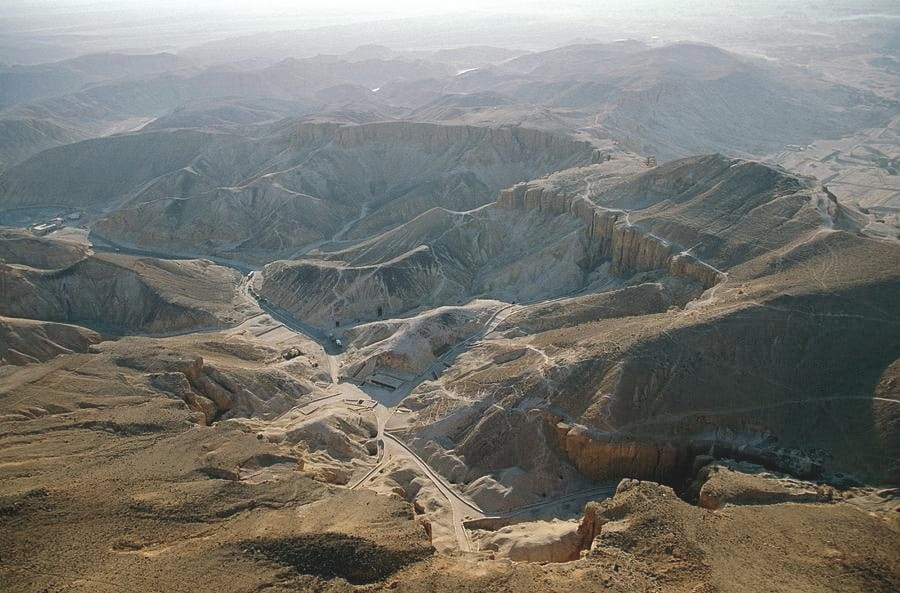
The final resting place of Egypt's greatest pharaohs — 65 tombs carved into the Theban cliffs over 500 years of the New Kingdom. Where Howard Carter opened the most famous door in history.


"The Great and Majestic Necropolis of the Millions of Years of the Pharaoh"
Wadi al-Muluk
Luxor Governorate, Upper Egypt
New Kingdom · Dynasties XVIII–XX
~500 years as royal burial ground
KV1–KV65 (East Valley) + WV (West Valley)
Part of "Ancient Thebes with its Necropolis"
(Systematic modern excavation)
4 November 1922
Multiple international missions
First royal tomb since KV62
For 500 years, every major pharaoh of Egypt's New Kingdom chose this sun-bleached valley as their eternal home — not to be remembered, but to be hidden.
Why This Valley?
The choice of the Valley of the Kings as Egypt's royal necropolis was not accidental. The valley lies on the west bank of the Nile — the direction of the setting sun, and therefore the realm of the dead in Egyptian cosmology. Above the valley rises al-Qurn — a naturally pyramid-shaped peak that the ancient Egyptians considered sacred, a natural pyramid watching over their kings.
After millennia of pyramid tombs at Memphis (Giza, Saqqara, Dahshur), the pharaohs of the New Kingdom made a radical decision: instead of building monuments visible from a great distance, they would hide. The great pyramids had been systematically looted despite their size. The new approach — cutting invisible tombs deep into limestone cliffs — would, they hoped, defeat the grave robbers. It largely failed. Almost every tomb in the valley was plundered in antiquity, some within decades of sealing. The one exception, preserved by the accident of being buried under debris from a later tomb above, was the small unremarkable tomb of a boy king named Tutankhamun.
The Builders — The Workers of Deir el-Medina
The tombs were built by a permanent community of skilled workers who lived in the nearby village of Deir el-Medina — one of the best-documented communities in the ancient world. Their records, found in the form of ostraca (inscribed pottery fragments) and papyri, reveal details of daily life, wages, labour disputes (including the world's first recorded worker's strike, c. 1170 BC), love poetry, and detailed accounts of the tomb construction process. These workers — painters, plasterers, sculptors, and scribes — were handsomely paid in grain, fish, vegetables, and pottery, reflecting their vital status.

Of 65 known tombs, 10 are currently open to visitors. Your standard ticket covers 3 — choose carefully. Four additional tombs require separate premium tickets.
Ramesses IV
Ramesses III
Ramesses IX
Merenptah
Tausert & Setnakht
Ramesses VII
Also Open on Standard Ticket
KV15 (Sety II) · KV16 (Ramesses I) — smaller but historically significant · KV43 (Thutmose IV) · KV47 (Siptah) — check availability on the day as rotation changes
Seti I
Tutankhamun
Ramesses V & VI
Ay
Everything you need to plan a perfect visit — tickets, how to get there, what to bring, and photography rules updated for December 2025.
| Ticket | Price | Includes |
|---|---|---|
| Standard Entry | 750 EGP | Entry + 3 tombs of your choice from the standard list + tram ride |
| KV9 — Ramesses V/VI | +220 EGP | Best value extra — complete decoration + astronomical ceiling |
| KV62 — Tutankhamun | +700 EGP | Boy King's mummy in situ · Phone photography only |
| WV23 — Tomb of Ay | +200 EGP | West Valley · 25-min walk · Remote and quiet |
| KV17 — Seti I | +2,000 EGP | Finest tomb in Egypt · Limited daily entries · Book early |
💳 Payment — Card Only
As of 2025, cash is no longer accepted at the Valley of the Kings ticket office. Payment by credit or debit card only. Two counters: one for standard entry, one for extra-ticket tombs. Decide before joining the queue which extras you want.
| Method | Journey | Cost |
|---|---|---|
| Private taxi / driver | 20–30 min from Luxor centre | EGP 200–400 (negotiate round trip + wait) |
| Organised tour | Pickup from hotel | $25–60 USD including guide |
| Local ferry + taxi | Ferry across Nile (EGP 10) then taxi on West Bank | Most affordable option |
| Bicycle | 45 min from ferry landing | EGP 50–80 bicycle rental · Early morning only |
A small electric tram runs from the ticket office to the tomb area — the ride is short but worth it in the heat (included in your ticket). It runs continuously throughout opening hours.
The Valley of the Kings lies on the west bank of the Nile directly opposite Luxor — 650 km south of Cairo.
The Valley of the Kings is the centrepiece of the West Bank — but the surrounding area contains some of Egypt's most important sites, all within a few kilometres.
The best documentaries and tours inside the Valley of the Kings — from aerial drone footage to inside the tombs themselves.
Egypt's Valley of the Kings — Inside King Tut's Tomb & More (2025)
Walk through the Valley of the Kings and descend into Tutankhamun's tomb — full exploration of the open tombs.
Treasures of the Valley of the Kings — Egypt Documentary 4K
Full 4K documentary covering the history, archaeology, and most important tombs of the valley.
Inside Tutankhamun's Tomb — Channel 5 Ancient History Documentary
Bettany Hughes explores Tutankhamun's burial chamber and the incredible story of Howard Carter's 1922 discovery.
8 questions on the Valley of the Kings — from the basic to the expert.