Karnak
Temple Complex
The largest religious site ever constructed — 247 acres of temples, pylons, obelisks, and sacred lakes built by 30+ pharaohs over 2,000 years. The spiritual heart of ancient Egypt for five centuries.
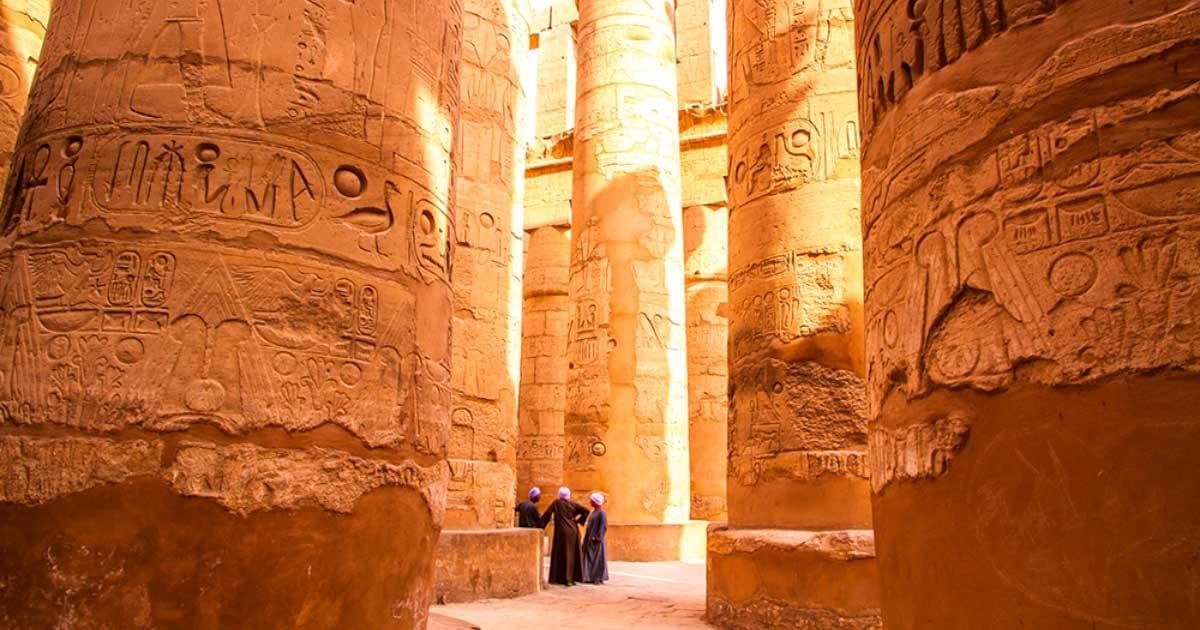
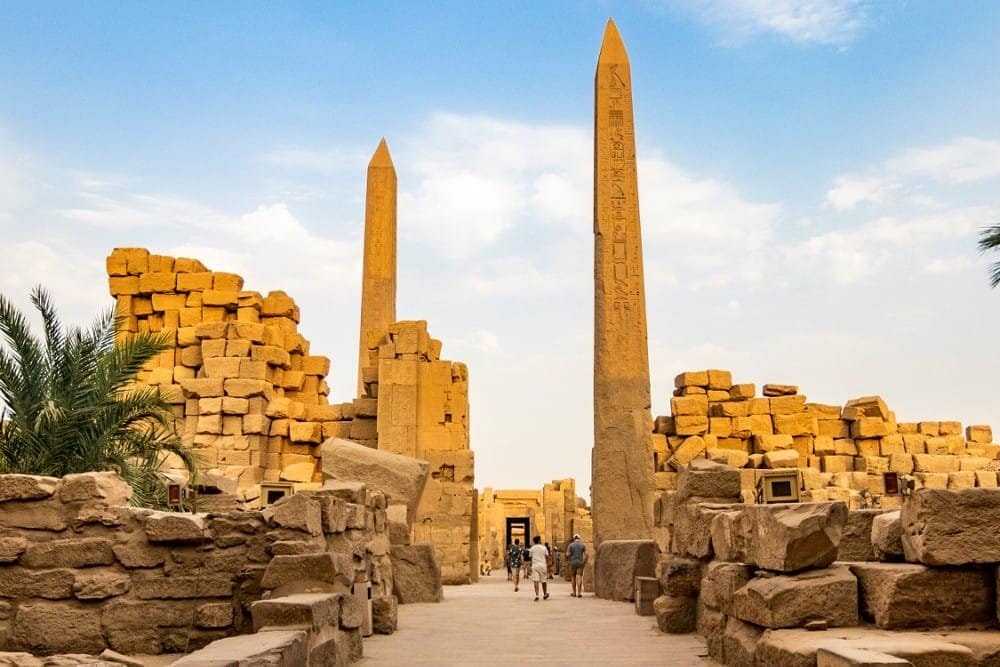
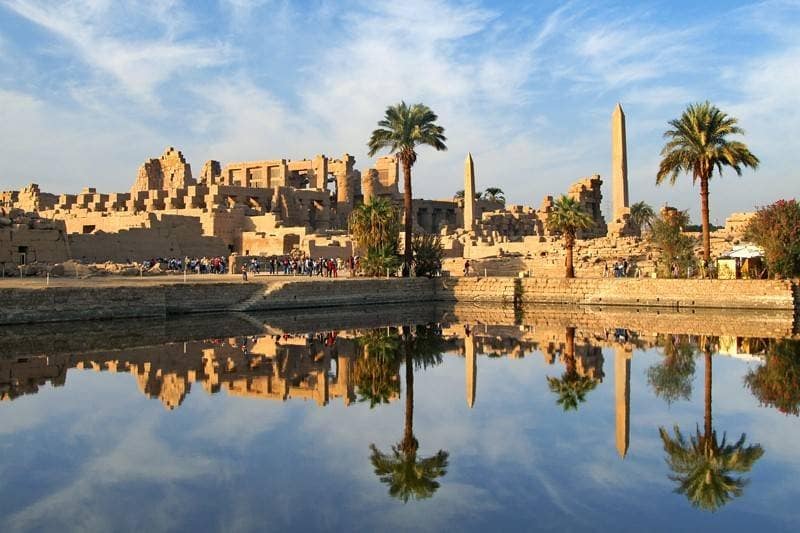
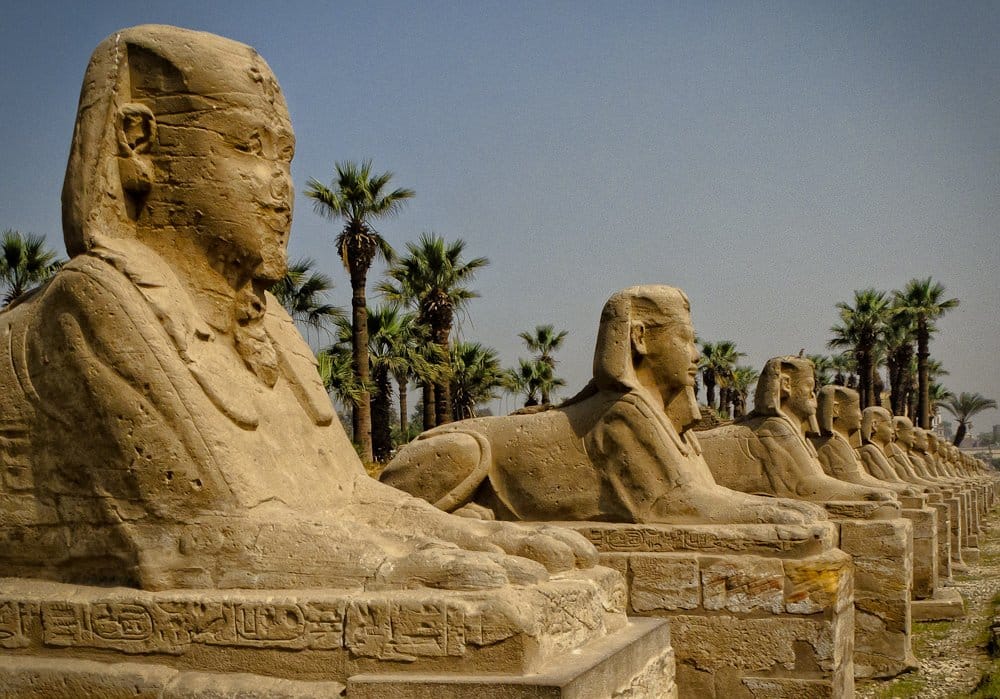

"The Most Select of Places" — the holy of holies of Amun-Ra
Al-Karnak
3 km north of Luxor Temple
Larger than many ancient cities
Also Mut (wife) and Khonsu (son) — the Theban Triad
Over 2,000 years · 30+ pharaohs
Amun-Ra · Mut · Montu · Amenhotep IV
Each built by a different pharaoh
Temples · Chapels · Obelisks · Colossi
As part of "Ancient Thebes with its Necropolis"
Separate ticket · 1 hour
Karnak was not built — it grew. Over 2,000 years, every pharaoh who wanted to demonstrate power, piety, or legitimacy came here and added something. The result is the most complex religious monument in human history.
Ipet-Isut — The Most Select of Places
The ancient Egyptians called Karnak Ipet-Isut — "The Most Select of Places." It was the principal sanctuary of Amun-Ra, the king of the gods and the divine patron of the pharaohs. For nearly 2,000 years of the New Kingdom, when Egypt was the dominant superpower of the ancient world, Karnak was the spiritual and political centre of that power.
Construction began in the Middle Kingdom around 2000 BC with a modest sanctuary. But it was the New Kingdom pharaohs — beginning with Thutmose I (c. 1504 BC) — who transformed it into a colossus. Each successive pharaoh added a new pylon (the great gateway towers) in front of the existing one, extending the complex westward toward the Nile. The result is a sequence of 10 pylons, each representing a different reign, a different vision of grandeur.
The Wealth of Amun
By the reign of Ramesses III (c. 1184 BC), the Temple of Karnak owned 65 towns, 83 ships, 421,000 head of livestock, and 81,000 workers, according to the Harris Papyrus — the largest administrative document to survive from ancient Egypt. Amun's priesthood had become so wealthy and powerful that they effectively governed Upper Egypt as an independent religious state, a situation that eventually contributed to the collapse of the New Kingdom.

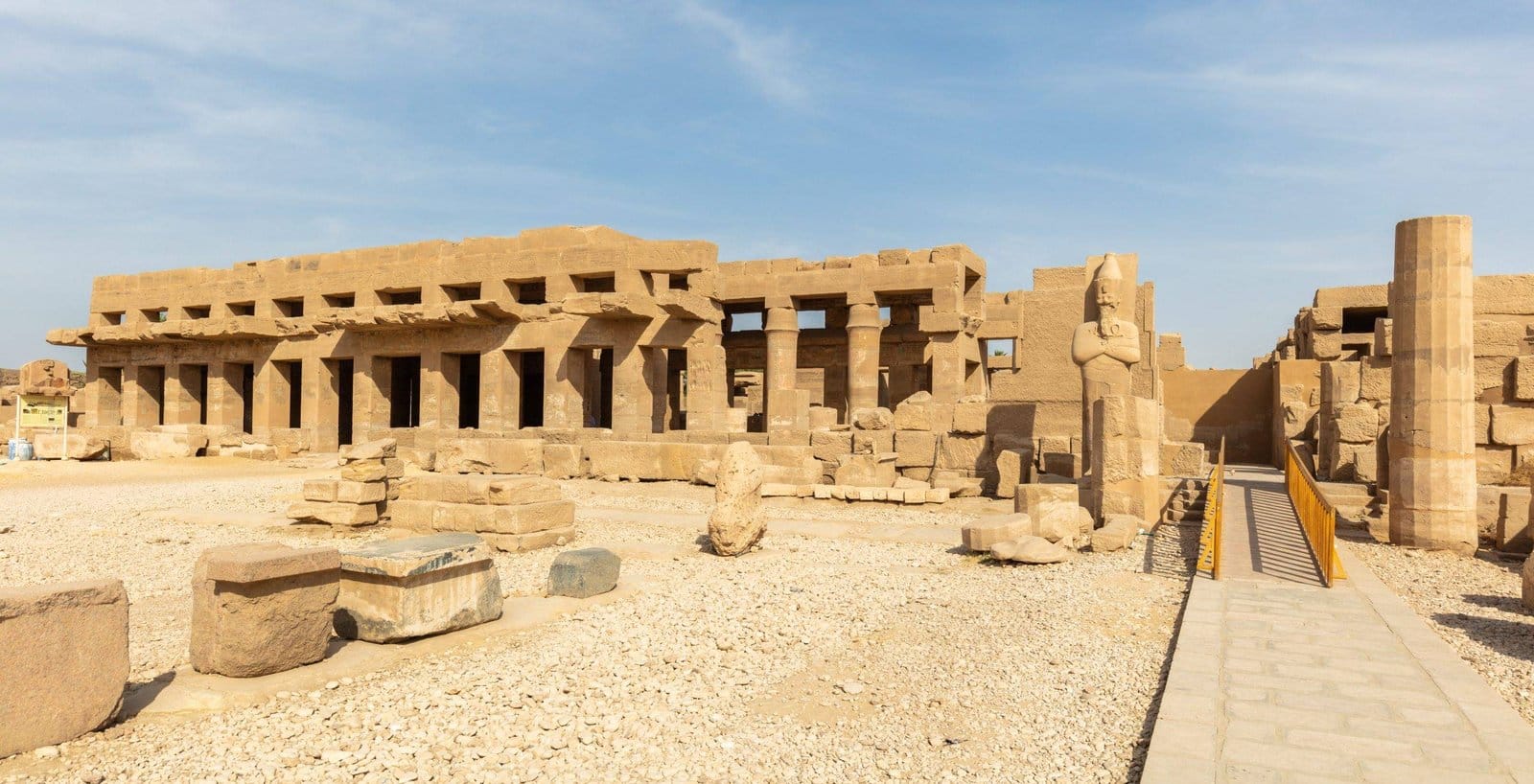
Karnak is not a single temple but a city of temples — 4 precincts, 10 pylons, 134-column hypostyle hall, sacred lakes, obelisks, and 200+ structures. Here is what to see and where.
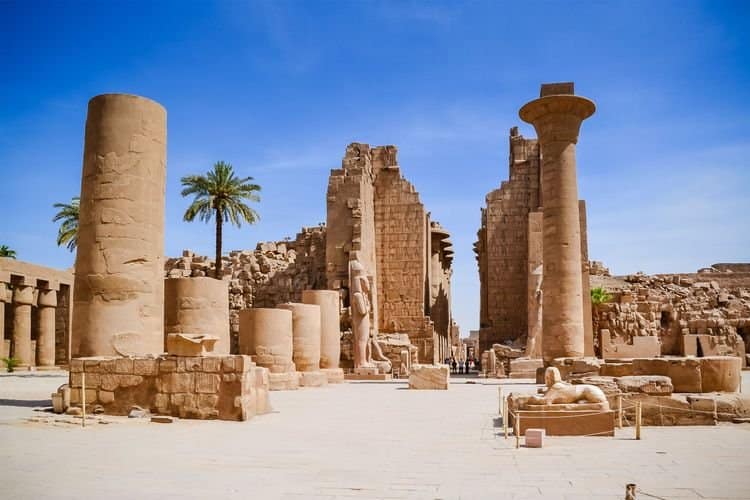
A pylon is a massive gateway tower — the most visible element of Egyptian temple architecture. Karnak has 10, each built by a different pharaoh. They are numbered from inside (oldest, Pylon 4) to outside (newest, Pylon 1). This reverse numbering reflects the westward expansion of the complex toward the Nile over 1,000 years.
~43m tall (planned)
c. 1504 BC
→ Mut · → Luxor
The Cachette Court — The Greatest Statue Discovery
In 1903, French archaeologist Georges Legrain discovered a pit beneath a courtyard at Karnak — the Cachette Court — containing 779 stone statues and 17,000 bronze figurines, deliberately buried by the ancient priests, probably to clear space in the temple. The statues are now distributed between the Egyptian Museum (Cairo), the Luxor Museum, and Karnak's own storerooms. The majority have never been displayed. The court is now open and visible to visitors.
30+ pharaohs left their mark on Karnak over 2,000 years. Here are the eight who made the greatest contributions.
Everything you need for a perfect visit to Karnak — tickets, getting there, the Sound & Light show, and essential tips.
| Category | Price |
|---|---|
| Foreign Adults | 600 EGP |
| Foreign Students (ID required) | 300 EGP |
| Egyptian Adults | 40 EGP |
| Egyptian Students | 20 EGP |
| Open-Air Museum (extra) | ~100 EGP |
| Sound & Light Show | ~220 EGP |
| Session | Hours |
|---|---|
| Main complex (daily) | 6:00 AM – 5:30 PM |
| Best photography | 6:00 – 9:00 AM (golden light) |
| Sound & Light (English) | Check schedule — nightly |
| Ramadan hours | May vary — check locally |
| Method | Time & Cost |
|---|---|
| Taxi from central Luxor | 10 min · EGP 50–100 |
| Horse carriage (calèche) | 20 min · negotiate price |
| Walking from Luxor Temple | 35–40 min along Corniche |
| From Luxor Temple by Avenue of Sphinxes | 30 min walk · recently restored |
| Organised tour (with guide) | Half-day from EGP 500+ |
💡 The Luxor Pass
The Luxor Pass (Upper Egypt) covers Karnak, Luxor Temple, Valley of the Kings (standard ticket), Hatshepsut, Medinet Habu, and most other Luxor sites. Costs approximately $100 USD (5 days) or $200 USD (3 months). Excellent value if visiting more than 4–5 sites. Buy at the Luxor Museum or online.
Karnak sits on the east bank of the Nile, 3 km north of Luxor Temple — connected to it by the restored Avenue of Sphinxes.
Karnak anchors the East Bank of Luxor. Combine it with Luxor Temple (same bank, 3 km south) or cross the Nile for the West Bank sites.
Amun's Karnak — Egypt's Greatest Temple (Documentary 2025)
Tristan Hughes explores the Karnak Temple — the power of Amun-Ra and the pharaohs who built the world's largest religious complex.
Karnak: Inside Ancient Egypt's Largest Temple Complex (October 2025)
Full journey through Karnak — the Great Hypostyle Hall, sacred lake, obelisks, and 2,000 years of construction explained.
Egypt's Greatest Temple — Karnak 4K Documentary
High-quality 4K documentary covering the scale and significance of Karnak — pylons, halls, and the Precinct of Amun-Ra.